Bowl with Seven Treasures (1861–78): Art, History and Details
Bowl with Seven Treasures at the Cleveland Museum of Art: 1861–78, Stoneware with overglaze color enamel and gold. Explore the work's context, creator attribution and collection history.
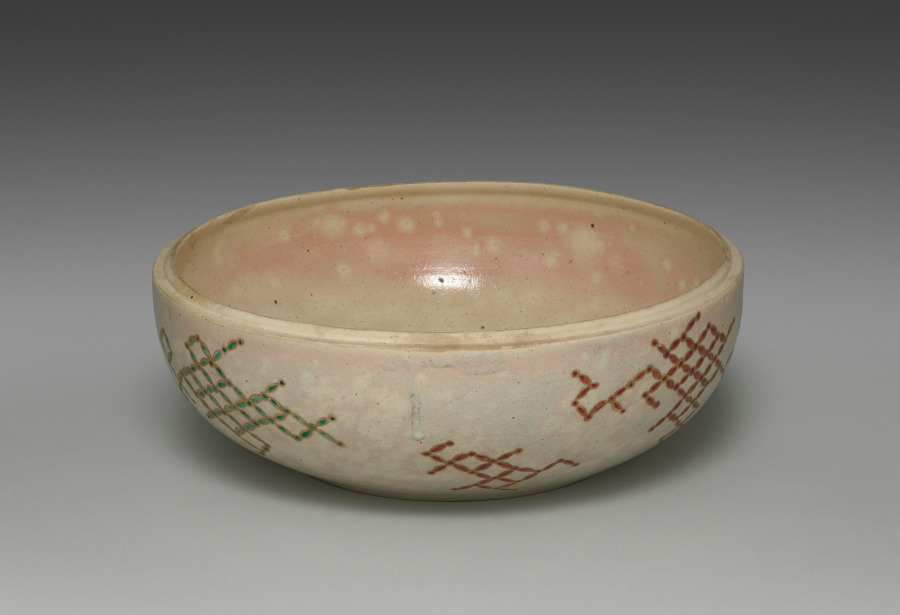
Bowl with Seven Treasures (1861–78) is in the Cleveland Museum of Art collection. The museum's creator attribution is Seifū Yohei II (Japanese, 1844–1878).
The work and its context
The museum's open-access catalogue describes the work:
While porcelain was their primary specialization, all the members of the Seifū studio also made stoneware painted with iron oxide designs under the glaze and with color enamel and gold over the glaze. Many examples are further characterized by pink dots brought out during firing and by crackling in the glaze. Works of this type are classified as Kyoto ware, after the city where the style developed. People used the ceramics for a diversity of purposes, from everyday dining to chanoyu, or Japanese tea practice.
Object facts
- Title: Bowl with Seven Treasures
- Date: 1861–78
- Creator attribution: Seifū Yohei II (Japanese, 1844–1878)
- Culture: Japan, Edo period (1615–1868)
- Type: Ceramic
- Technique: Stoneware with overglaze color enamel and gold
- Collection: Japanese Art
- Department: Japanese Art
- Accession number: 2022.146.a
A detail from the museum
Overglaze enamels in red, green, and white sit within lattices of jewel-shaped gold forms scattered across the lid and base in a design known as the seven treasures.
Collection credit
Gift of James and Christine Heusinger
Further reading listed by the museum
- Maezaki, Shinya and Sinéad Vilbar. Colors of Kyoto: The Seifū Yohei Ceramic Studio. Cleveland, OH: The Cleveland Museum of Art, 2023.
View the collection record
See the museum's photographs and full catalogue entry. Catalogue text is reproduced from the Cleveland Museum of Art's open-access data, with HTML formatting removed. This object and its supplied image are designated CC0.
Sources
More in Lifestyle
Keep reading