Bull's-Head Amulet (c. 3500–2950 BCE): Art, History and Details
Bull's-Head Amulet at the Cleveland Museum of Art: c. 3500–2950 BCE, amethyst. Explore the work's context, creator attribution and collection history.
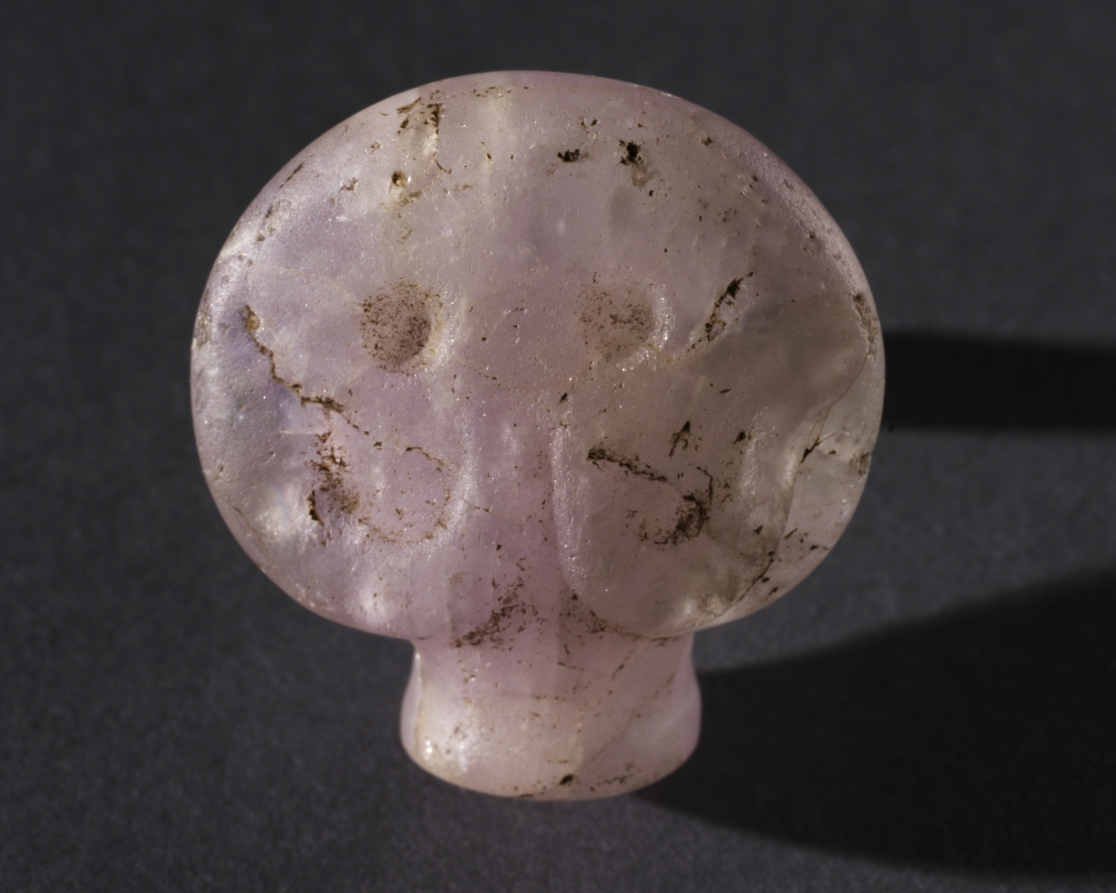
Bull's-Head Amulet (c. 3500–2950 BCE) is in the Cleveland Museum of Art collection.
The work and its context
The museum's open-access catalogue describes the work:
This stunning amethyst amulet takes the shape of the head of a bull, an animal renowned from the earliest times in Egypt for its natural strength. The image presented is abstract, with only the most important of the animal features being represented: horns that curl downward in low relief, large eyes, and a narrow, cylindrical snout. The back is pierced horizontally for suspension. A well known but rare type, the bull's head amulet is also one of the earliest of all amulets from ancient Egypt, datable to the Predynastic period (4000–3000 BC). The outstanding composition and luxuriant violet hue of this example single it out as one of the very finest of its kind.
Object facts
- Title: Bull's-Head Amulet
- Date: c. 3500–2950 BCE
- Culture: Egypt, Predynastic (5000–2950 BCE), Naqada II–III (3650–3000 BCE)
- Type: Amulets
- Technique: amethyst
- Dimensions: Overall: 3.4 x 3.7 x 2.6 cm (1 5/16 x 1 7/16 x 1 in.)
- Collection: Egypt - Predynastic
- Department: Egyptian and Ancient Near Eastern Art
- Accession number: 1998.26
A detail from the museum
In ancient Egypt the symbol of a bull, when worn or held, was believed to offer protection and increase fertility.
Collection credit
John L. Severance Fund
Further reading listed by the museum
- Berman, Lawrence M., and Kenneth J. Bohač. Catalogue of Egyptian Art: The Cleveland Museum of Art. Cleveland, OH: Cleveland Museum of Art, 1999
View the collection record
See the museum's photographs and full catalogue entry. Catalogue text is reproduced from the Cleveland Museum of Art's open-access data, with HTML formatting removed. This object and its supplied image are designated CC0.
Sources
More in Lifestyle
Keep reading
Related stories