Box and Cover (918–1392): Art, History and Details
Box and Cover at the Cleveland Museum of Art: 918–1392, celadon. Explore the work's context, creator attribution and collection history.
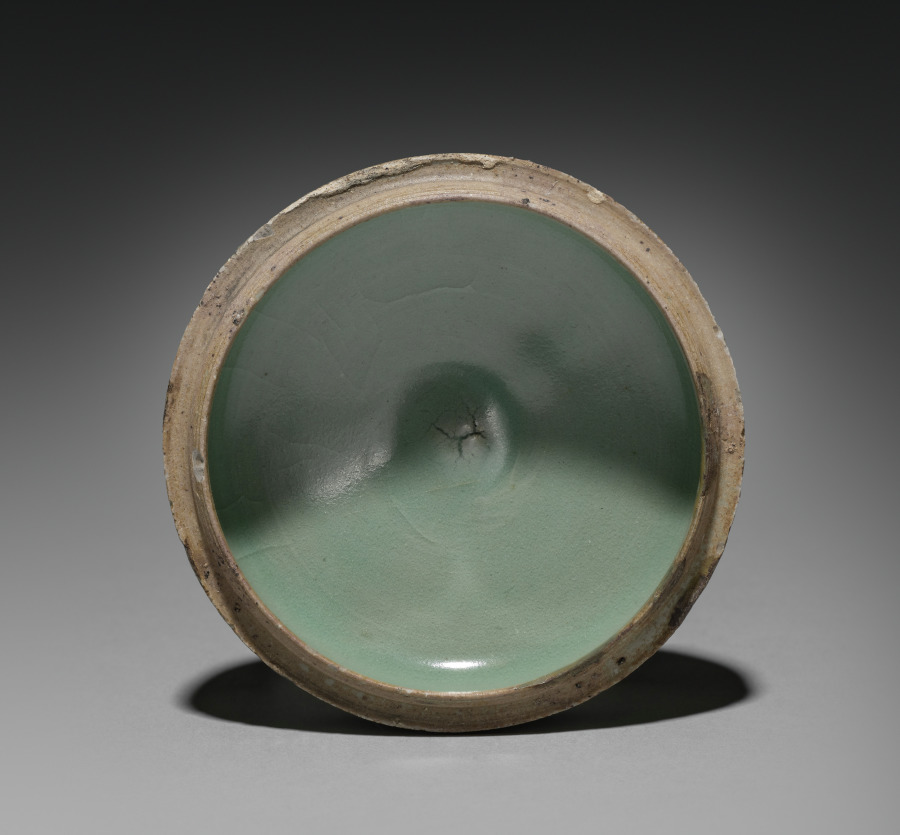
Box and Cover (918–1392) is in the Cleveland Museum of Art collection.
The work and its context
The museum's open-access catalogue describes the work:
Celadons, spoons, seals, and bronze mirrors were the most common burial objects in tombs during the Goryeo period (918-1392). Once used to contain color powder, rouge and eyebrow gel for makeup, this small container was one of the standard goods that furnished elites' tombs. Goryeo-period women and men used the grain powder of rice or millet for whitening their skin, safflower extract for rouge, and plant ash or soot for eyebrow gel. Yet, natural-looking make-up seems to have been the most favorable one in Korea according to the travelogue by Xu Jing (1091-1153), the Chinese diplomat who visited Korea in 1123.
Object facts
- Title: Box and Cover
- Date: 918–1392
- Culture: Korea, Goryeo dynasty (918–1392)
- Type: Ceramic
- Technique: celadon
- Collection: Korean Art
- Department: Korean Art
- Accession number: 1918.423.a
A detail from the museum
This ceramic container was used to store incense or cosmetics.
Collection credit
Gift of John L. Severance
Further reading listed by the museum
- Ch'a, Mi-rae, Kwi-suk An, Cleveland Museum of Art, and 국외소재문화재재단. The Korean Collection of the Cleveland Museum of Art. Edited by An Min-hŭi. First edition, English ed. Overseas Korean Cultural Heritage Series, 16. Seoul, Republic of Korea: Overseas Korean Cultural Heritage Foundation, 2021.
View the collection record
See the museum's photographs and full catalogue entry. Catalogue text is reproduced from the Cleveland Museum of Art's open-access data, with HTML formatting removed. This object and its supplied image are designated CC0.
Sources
More in Lifestyle
Keep reading