Bracelet (1700s): Art, History and Details
Bracelet at the Cleveland Museum of Art: 1700s, Gold, emeralds, diamonds, and enamel. Explore the work's context, creator attribution and collection history.
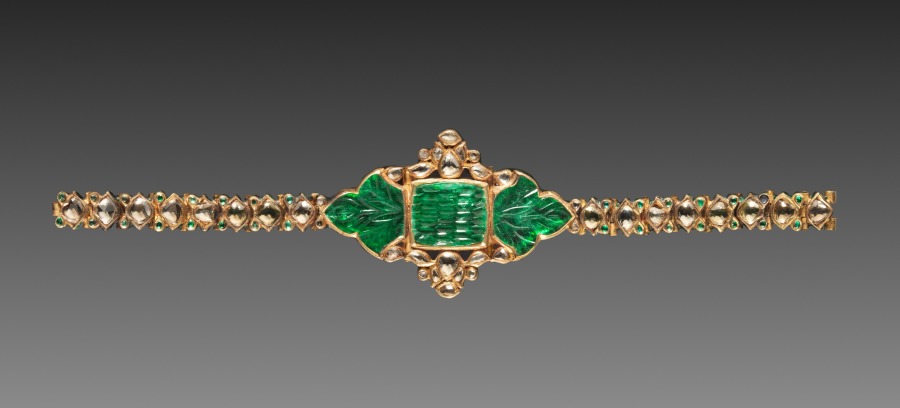
Bracelet (1700s) is in the Cleveland Museum of Art collection.
The work and its context
The museum's open-access catalogue describes the work:
From the beginning of Emperor Jahangir’s reign in 1605, Mughal court culture became increasingly focused on jewels. Gems were the source of much of the court’s wealth, and the diamond mines of the southern regions of the Deccan provided financial incentives for Mughal conquest of those territories. According to European diplomatic accounts, gems were the preferred gift to the emperor. This bracelet was likely produced in the city of Jaipur in northwestern India, which was famed for its jewelry and enamel making and has been known as a major producer of Kundan since the 18th century. Kundan is a traditional form of Indian jewelry wherein gemstones are set into gold foil. Emeralds, like the stones seen here, arrived in India from Colombia via Portuguese merchants in Goa.
Object facts
- Title: Bracelet
- Date: 1700s
- Culture: India, Mughal, Rajasthan, Jaipur, 18th century
- Type: Jewelry
- Technique: Gold, emeralds, diamonds, and enamel
- Dimensions: Overall: 4 cm (1 9/16 in.)
- Collection: Indian Art
- Department: Indian and Southeast Asian Art
- Accession number: 1966.516
Collection credit
Bequest of Anne Jessop Smith
View the collection record
See the museum's photographs and full catalogue entry. Catalogue text is reproduced from the Cleveland Museum of Art's open-access data, with HTML formatting removed. This object and its supplied image are designated CC0.
Sources
More in Lifestyle
Keep reading