Brooklyn Bridge, New York (1927): Art, History and Details
Brooklyn Bridge, New York at the Cleveland Museum of Art: 1927, drypoint. Explore the work's context, creator attribution and collection history.
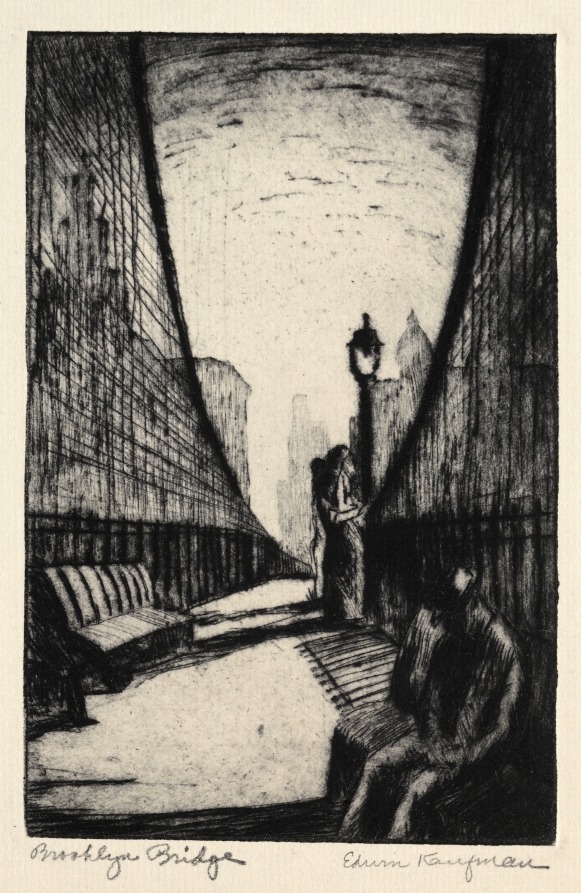
Brooklyn Bridge, New York (1927) is in the Cleveland Museum of Art collection. The museum's creator attribution is Edwin Kaufman (American, 1906–1939).
The work and its context
The museum's open-access catalogue describes the work:
This dark, brooding scene places the viewer directly on the Brooklyn Bridge along its pedestrian walkway. The heavy lines and isolated, melancholy figures imbue the print with a sense of foreboding. Although Edwin Kaufman lived in New York City starting in the mid-1930s, it is likely that he made this print earlier, in the late 1920s. During this time, the artist’s prints featuring city bridges and marketplaces were being recognized in exhibitions in Cleveland and New York.
Object facts
- Title: Brooklyn Bridge, New York
- Date: 1927
- Creator attribution: Edwin Kaufman (American, 1906–1939)
- Culture: America, Ohio, Cleveland
- Type: Print
- Technique: drypoint
- Dimensions: Platemark: 16.3 x 10.7 cm (6 7/16 x 4 3/16 in.)
- Collection: PR - Drypoint
- Department: Prints
- Accession number: 1942.910
A detail from the museum
From 1922 to 1925, motor vehicles were banned from driving on the Brooklyn Bridge.
Collection credit
Gift of Robert Hays Gries
Further reading listed by the museum
- Edwin Kaufman Entry Card to 1928 May Show. Cleveland Museum of Art May Show Records, Cleveland Museum of Art Archives
View the collection record
See the museum's photographs and full catalogue entry. Catalogue text is reproduced from the Cleveland Museum of Art's open-access data, with HTML formatting removed. This object and its supplied image are designated CC0.
Sources
More in Lifestyle
Keep reading