Buffalo Mask (early to mid-1900s): Art, History and Details
Buffalo Mask at the Cleveland Museum of Art: early to mid-1900s, Wood, plant fibers, paint, and iron. Explore the work's context, creator attribution and collection history.
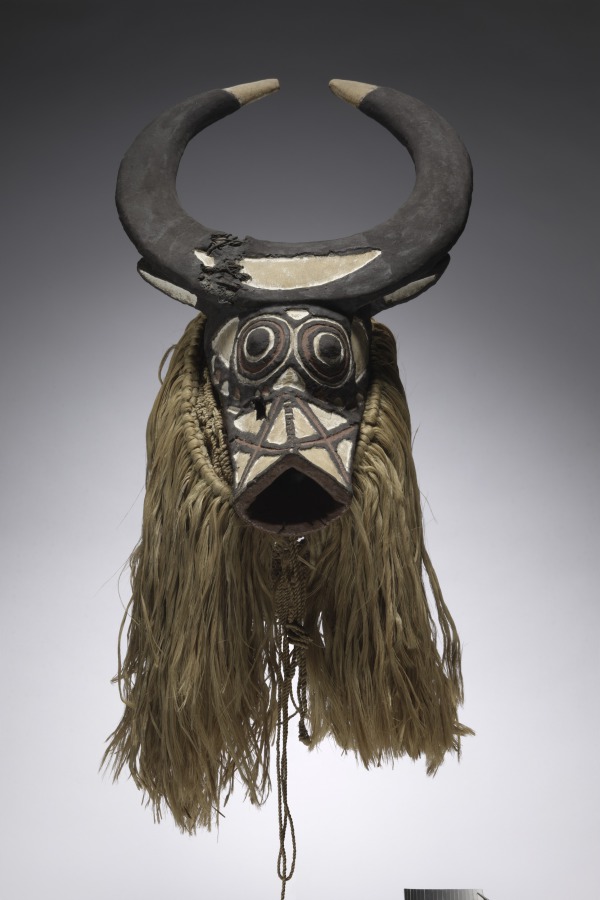
Buffalo Mask (early to mid-1900s) is in the Cleveland Museum of Art collection.
The work and its context
The museum's open-access catalogue describes the work:
Among the Bwa people, masks with human, animal, and fantastic traits typically represent protective bush spirits. This mask’s horns and muzzle identify it as a bush buffalo. Masked dancers appear during the dry season for initiations, funerals of elders, market days, harvest celebrations, and annual renewal rituals to protect the well-being of the community.
Object facts
- Title: Buffalo Mask
- Date: early to mid-1900s
- Culture: Africa, West Africa, Burkina Faso, possibly Bwa-style maker
- Type: Mask
- Technique: Wood, plant fibers, paint, and iron
- Dimensions: Overall: 69.8 cm (27 1/2 in.)
- Collection: African Art
- Department: African Art
- Accession number: 1969.2
A detail from the museum
Once broken, the right horn of this mask was repaired; this indicates that it was valued.
Collection credit
Gift of Katherine C. White
Further reading listed by the museum
- Fagg, William. African Tribal Images: the Katherine White Reswick Collection. Cleveland: Cleveland Museum of Art, 1968.
- Lee, Sherman E. “The Year in Review for 1969.” The Bulletin of the Cleveland Museum of Art 57, no. 1 (January 1970): 2–50.
- The Cleveland Museum of Art. Handbook of the Cleveland Museum of Art/1978. Cleveland, OH: The Cleveland Museum of Art, 1978.
View the collection record
See the museum's photographs and full catalogue entry. Catalogue text is reproduced from the Cleveland Museum of Art's open-access data, with HTML formatting removed. This object and its supplied image are designated CC0.
Sources
More in Lifestyle
Keep reading