Cap with Striped Inscribed Silk (1300s): Art, History and Details
Cap with Striped Inscribed Silk at the Cleveland Museum of Art: 1300s, Silk. Explore the work's context, creator attribution and collection history.
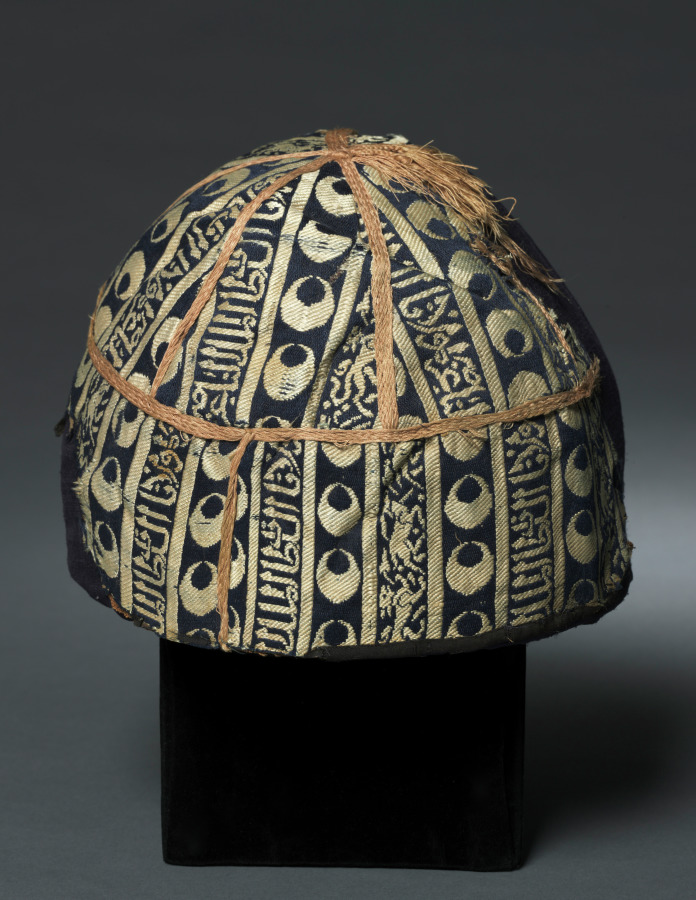
Cap with Striped Inscribed Silk (1300s) is in the Cleveland Museum of Art collection.
The work and its context
The museum's open-access catalogue describes the work:
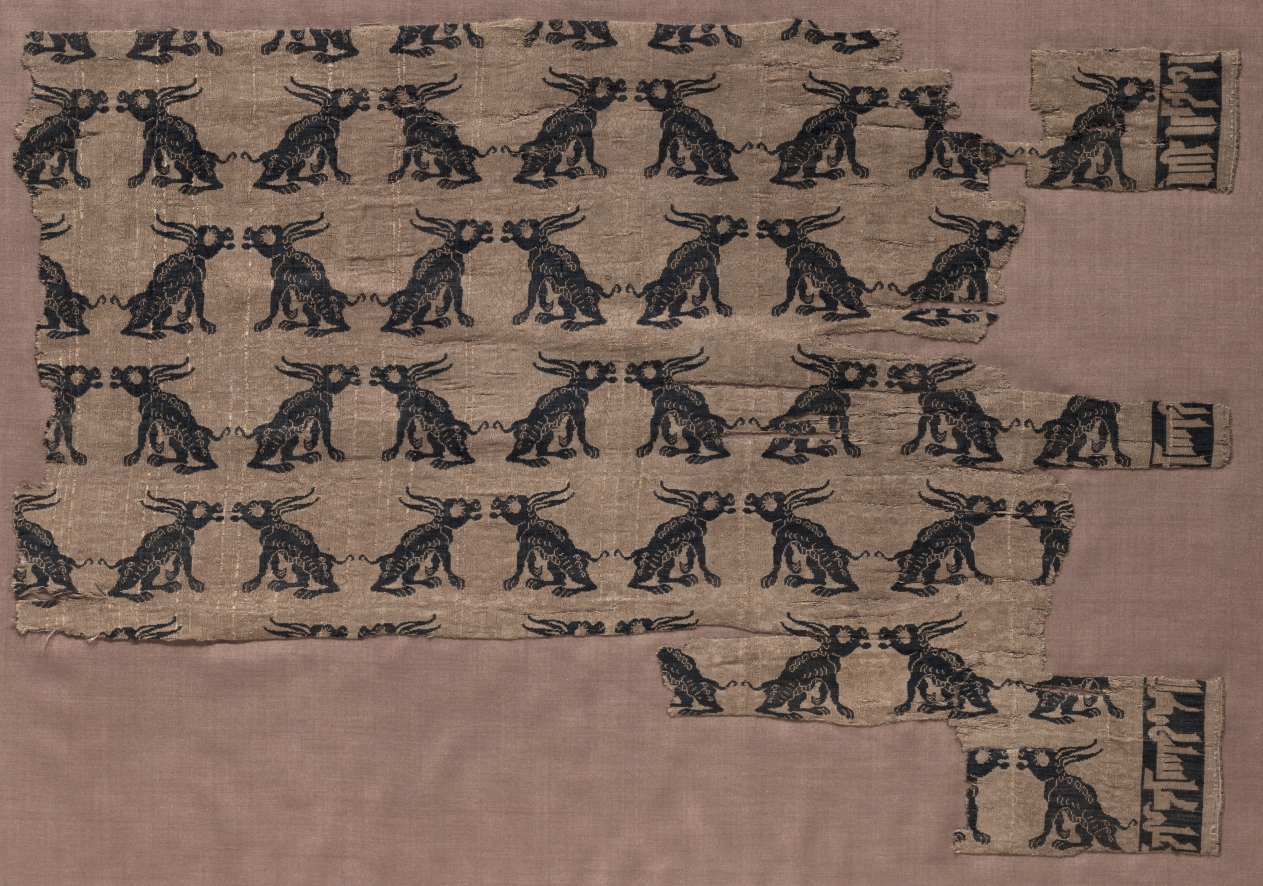
Headwear was a key part of men’s outfits in medieval Egypt. This luxurious cap was made using a complicated weaving technique, with alternating panels depicting prancing animals, crescent moons, and Arabic script that reads, “Glory to our lord Sultan al-Malik al-Nasir,” the Egyptian ruler. The pale pink trim might have once been a bold shade of red. Such products were created in highly regulated workshops in Cairo and reflect Egypt’s continued flourishing textile industry. Muslim dynasties such as the Mamluks (1250–1517) were known for the lavish garments worn at court and gifted among elites as preferred symbols of honor and praise.
Object facts
- Title: Cap with Striped Inscribed Silk
- Date: 1300s
- Culture: Mamluk Sultanate (Egypt or Syria)
- Type: Textile
- Technique: Silk
- Dimensions: Overall: 11.4 x 16.5 x 16.5 cm (4 1/2 x 6 1/2 x 6 1/2 in.)
- Collection: T - Islamic
- Department: Textiles
- Accession number: 1985.5
Collection credit
Purchase from the J. H. Wade Fund
Further reading listed by the museum
- Institut français d'archéologie orientale du Caire, Etienne Combe, Jean Sauvaget, and Gaston Wiet. Répertoire chronologique d'épigraphie arabe. Le Caire: Impr. de l'Institut français d'archéologie orientale, 1931.
- Schmidt, J. Heinrich. “Damaste Der Mamlūkenzeit.” Ars Islamica 1, no. 1 (1934): 99–109.
- Combe, Etienne, Jean Sauvaget, and Gaston Wiet. Répertoire chronologique d'épigraphie arabe. Vol. 15. Le Caire: Impr. de l'Institut français d'archéologie orientale, 1956.
View the collection record
See the museum's photographs and full catalogue entry. Catalogue text is reproduced from the Cleveland Museum of Art's open-access data, with HTML formatting removed. This object and its supplied image are designated CC0.
Sources
More in Lifestyle
Keep reading