Caparisoned Elephant (c. 1000s): Art, History and Details
Caparisoned Elephant at the Cleveland Museum of Art: c. 1000s, gilt bronze. Explore the work's context, creator attribution and collection history.
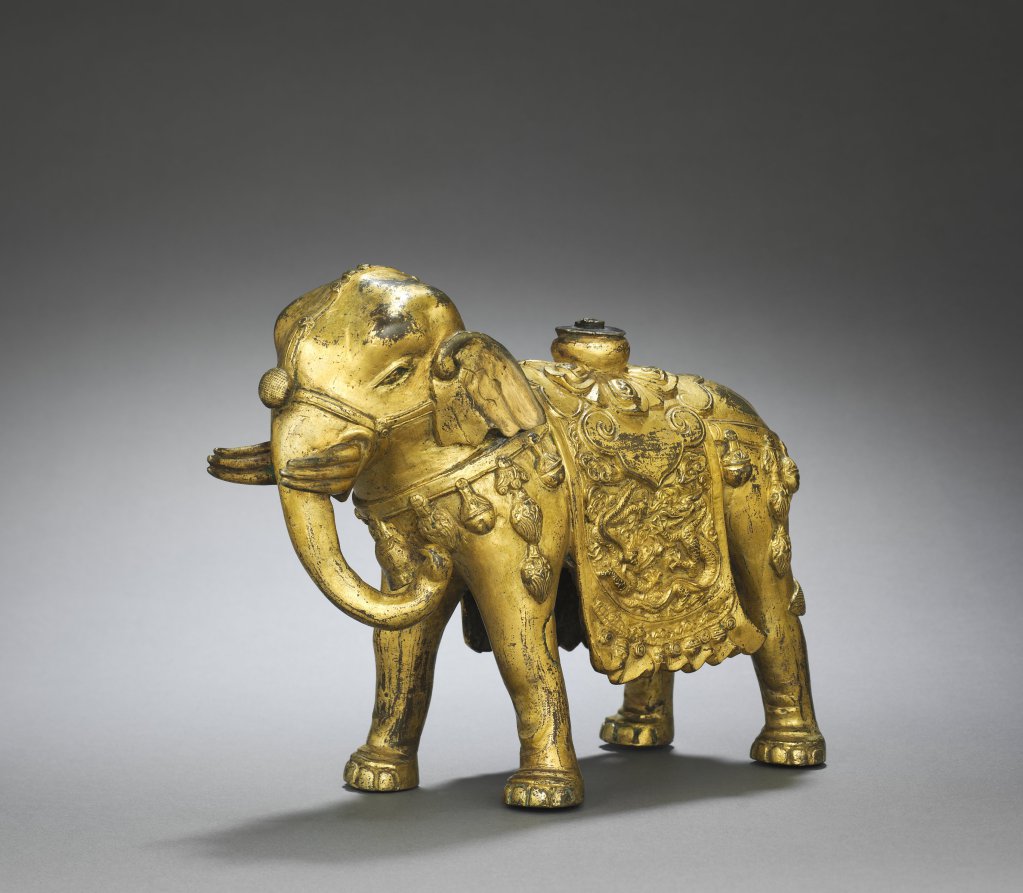
Caparisoned Elephant (c. 1000s) is in the Cleveland Museum of Art collection.
The work and its context
The museum's open-access catalogue describes the work:
The six-tusked elephant holds the throne of Puxian (Samantabhadra), the Bodhisattva of Universal Virtue, who often appears with Wenshu (Manjusri), the Bodhisattva of Wisdom, on his lion-vehicle. This impressive gilt bronze statue is solidly cast, except for the hollow at the center of its belly. The richly ornate saddle cloth exhibits superb craftsmanship and vivid representations of dragons among clouds, echoing the worldly splendor of the Liao material culture.
Object facts
- Title: Caparisoned Elephant
- Date: c. 1000s
- Culture: China, Liao dynasty (916-1125)
- Type: Sculpture
- Technique: gilt bronze
- Dimensions: Overall: 18.5 cm (7 5/16 in.)
- Collection: China - Liao Dynasty
- Department: Chinese Art
- Accession number: 1980.24
Collection credit
Andrew R. and Martha Holden Jennings Fund
Further reading listed by the museum
- Christie's London. Fine Chinese Ceramics, Paintings and Works of Art. 16 April 1980.
- Lee, Sherman E. “The Year in Review for 1980.” The Bulletin of the Cleveland Museum of Art 68, no. 6 (June 1981): 163–219.
View the collection record
See the museum's photographs and full catalogue entry. Catalogue text is reproduced from the Cleveland Museum of Art's open-access data, with HTML formatting removed. This object and its supplied image are designated CC0.
Sources
More in Lifestyle
Keep reading