Capri (1869): Art, History and Details
Capri at the Cleveland Museum of Art: 1869, oil on canvas. Explore the work's context, creator attribution and collection history.
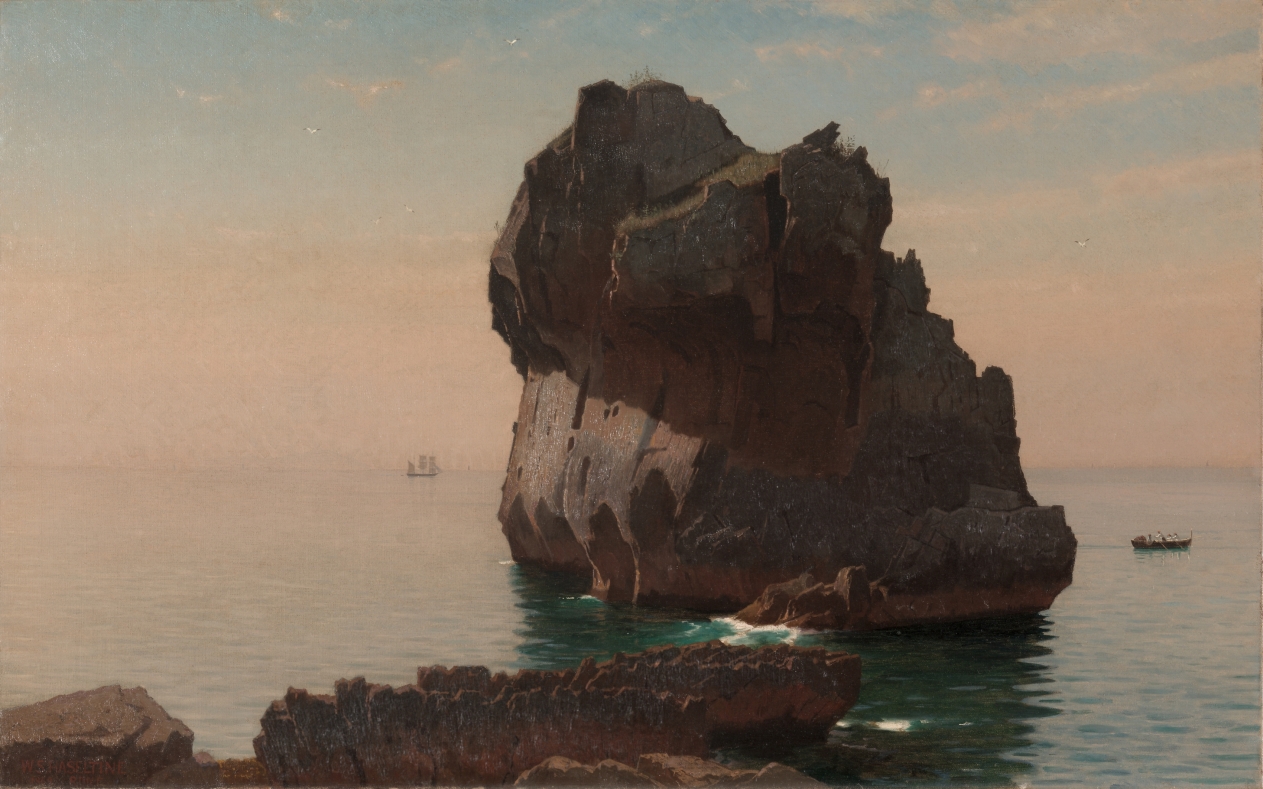
Capri (1869) is in the Cleveland Museum of Art collection. The museum's creator attribution is William Stanley Haseltine (American, 1835–1900).
The work and its context
The museum's open-access catalogue describes the work:
The Philadelphia-born Haseltine favored images of coastal rocks, painting them on both sides of the Atlantic throughout his career. Best known for his scenes of Maine and Massachusetts shorelines, Haseltine based this painting on volcanic rocks from the uninhabited eastern end of Capri, an island off the southwestern coast of Italy.
Object facts
- Title: Capri
- Date: 1869
- Creator attribution: William Stanley Haseltine (American, 1835–1900)
- Culture: United States
- Type: Painting
- Technique: oil on canvas
- Dimensions: Framed: 69.5 x 99.5 x 9 cm (27 3/8 x 39 3/16 x 3 9/16 in.); Unframed: 50 x 80 cm (19 11/16 x 31 1/2 in.)
- Collection: American - Painting
- Department: American Painting and Sculpture
- Accession number: 1975.4
A detail from the museum
The name Capri may derive from an ancient Greek word for wild boar, or a Latin word for goat.
Collection credit
Mr. and Mrs. William H. Marlatt Fund
Further reading listed by the museum
- Lee, Sherman E. “The Year in Review for 1975.” The Bulletin of the Cleveland Museum of Art 63, no. 2 (February 1976): 31–71.
- The Cleveland Museum of Art. Handbook of the Cleveland Museum of Art/1978. Cleveland, OH: The Cleveland Museum of Art, 1978.
View the collection record
See the museum's photographs and full catalogue entry. Catalogue text is reproduced from the Cleveland Museum of Art's open-access data, with HTML formatting removed. This object and its supplied image are designated CC0.
Sources
More in Lifestyle
Keep reading