Ceremonial Tube (Cong) (c. 1600–1056 BCE): Art, History and Details
Ceremonial Tube (Cong) at the Cleveland Museum of Art: c. 1600–1056 BCE, jade (nephrite). Explore the work's context, creator attribution and collection history.
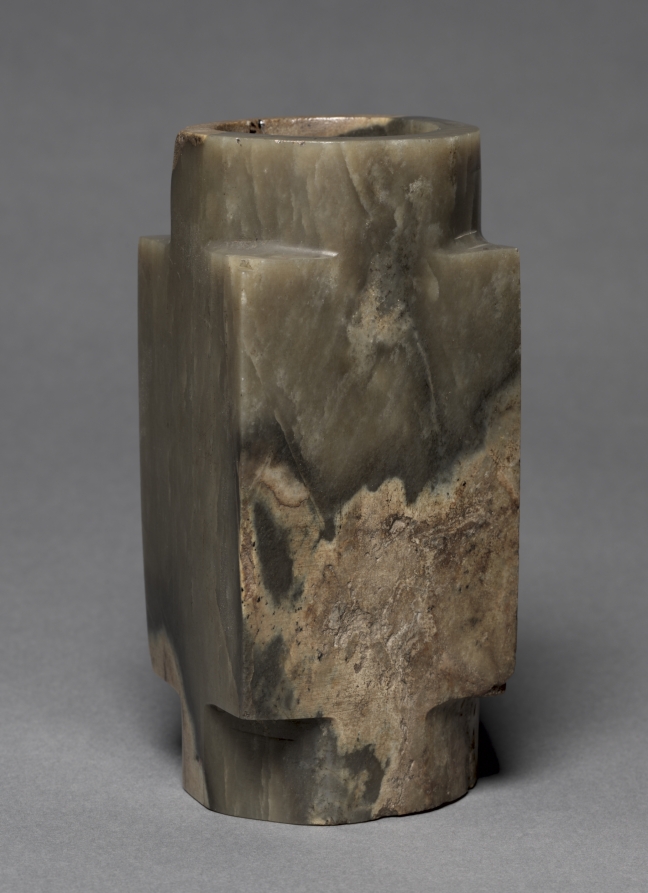
Ceremonial Tube (Cong) (c. 1600–1056 BCE) is in the Cleveland Museum of Art collection.
The work and its context
The museum's open-access catalogue describes the work:
The cong, a cylindrical tube with a square outer section, was one of the most impressive jade implements used in ancient rites. The ritual text Rites of Zhou mentions the use of the cong for the worship of the earth. However, its function and meaning in the earlier Neolithic societies are not completely understood.
Object facts
- Title: Ceremonial Tube (Cong)
- Date: c. 1600–1056 BCE
- Culture: China, Shang dynasty (c. 1600–c. 1046 BCE)
- Type: Jade
- Technique: jade (nephrite)
- Dimensions: Overall: 20.6 cm (8 1/8 in.)
- Collection: China - Shang Dynasty
- Department: Chinese Art
- Accession number: 1915.630
A detail from the museum
The Interior cavity of this piece of jade was bored from both ends, making an irregular ridge near the center.
Collection credit
Gift of the John Huntington Art and Polytechnic Trust
Further reading listed by the museum
- Wilson, J. Keith. "Lithic Art in the Bronze Age: A Jade Dagger-Axe." The Bulletin of the Cleveland Museum of Art 77, no. 1 (1990): 2-35.
View the collection record
See the museum's photographs and full catalogue entry. Catalogue text is reproduced from the Cleveland Museum of Art's open-access data, with HTML formatting removed. This object and its supplied image are designated CC0.
Sources
More in Lifestyle
Keep reading


