Chinese Servant Walking in the Rain (1500s): Art, History and Details
Chinese Servant Walking in the Rain at the Cleveland Museum of Art: 1500s, hanging scroll; ink on paper. Explore the work's context, creator attribution and collection history.
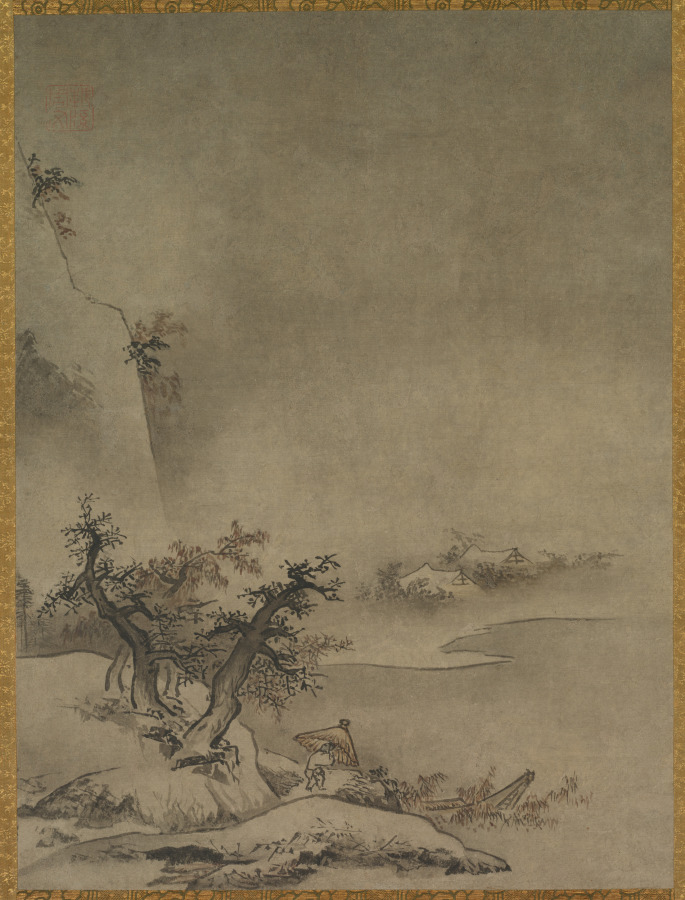
Chinese Servant Walking in the Rain (1500s) is in the Cleveland Museum of Art collection. The museum's creator attribution is Gakuō Zōkyū (Japanese, active about 1482–1514).
The work and its context
The museum's open-access catalogue describes the work:
Attributed to the artist Gakuō, this painting has a spurious seal of the influential Shōkokuji temple monk-painter Tenshō Shūbun (died about 1444–50), with whom he is said to have trained. Gakuō may have hailed from Ise in present-day Wakayama prefecture, an area south of Kyoto in the Kansai region. Although not much is known about his life, inscriptions on some of his paintings indicate strong ties with eminent monks in Kyoto’s major Zen temples.
Object facts
- Title: Chinese Servant Walking in the Rain
- Date: 1500s
- Creator attribution: Gakuō Zōkyū (Japanese, active about 1482–1514)
- Culture: Japan, Muromachi period (1392–1573)
- Type: Painting
- Technique: hanging scroll; ink on paper
- Dimensions: Mounted: 131.8 x 44.2 cm (51 7/8 x 17 3/8 in.)
- Collection: ASIAN - Hanging scroll
- Department: Japanese Art
- Accession number: 2015.512
Collection credit
Gift from the Collection of George Gund III
View the collection record
See the museum's photographs and full catalogue entry. Catalogue text is reproduced from the Cleveland Museum of Art's open-access data, with HTML formatting removed. This object and its supplied image are designated CC0.
Sources
More in Lifestyle
Keep reading