Clog-shaped Teabowl (early 1600s): Art, History and Details
Clog-shaped Teabowl at the Cleveland Museum of Art: early 1600s, Glazed stoneware (Mino ware, Oribe type). Explore the work's context, creator attribution and collection history.
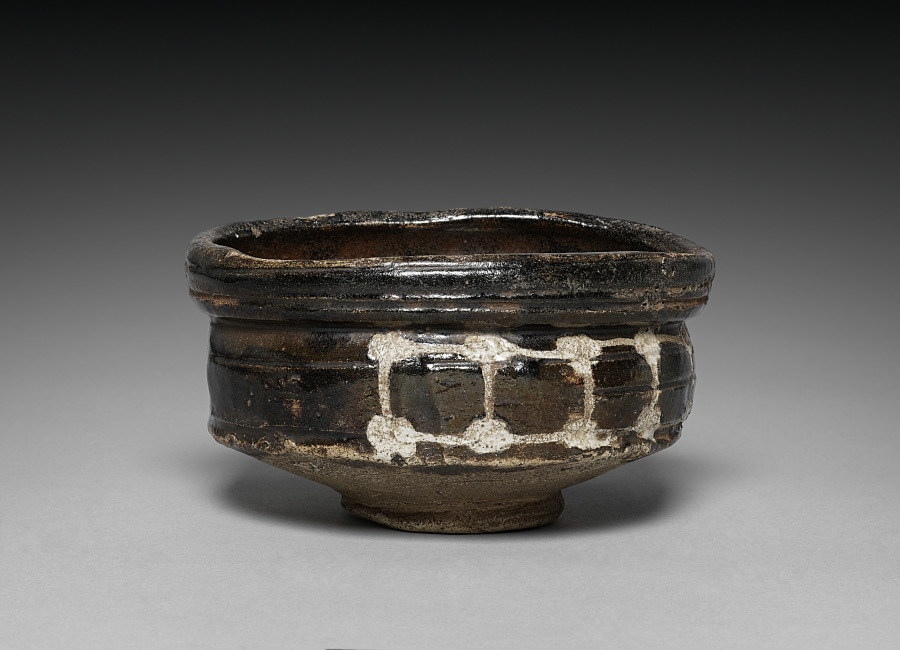
Clog-shaped Teabowl (early 1600s) is in the Cleveland Museum of Art collection.
The work and its context
The museum's open-access catalogue describes the work:
Tea gatherings are fundamental to Japanese culture. Teabowls like this one are the most important objects used in tea practice. Its oblong shape and bold abstract designs are the signature style of the time period in which it was produced. That style is called Oribe, named for the tea master who championed the aesthetic.
Object facts
- Title: Clog-shaped Teabowl
- Date: early 1600s
- Culture: Japan, Momoyama period (1573–1615)
- Type: Ceramic
- Technique: Glazed stoneware (Mino ware, Oribe type)
- Dimensions: Overall: 8 x 14.2 x 11.5 cm (3 1/8 x 5 9/16 x 4 1/2 in.)
- Collection: Japanese Art
- Department: Japanese Art
- Accession number: 2020.214
A detail from the museum
Oribe is a government position. It means the person in charge of textiles.
Collection credit
Severance and Greta Millikin Purchase Fund
View the collection record
See the museum's photographs and full catalogue entry. Catalogue text is reproduced from the Cleveland Museum of Art's open-access data, with HTML formatting removed. This object and its supplied image are designated CC0.
Sources
More in Lifestyle
Keep reading