Countess Széchenyi (1828): Art, History and Details
Countess Széchenyi at the Cleveland Museum of Art: 1828, oil on fabric. Explore the work's context, creator attribution and collection history.
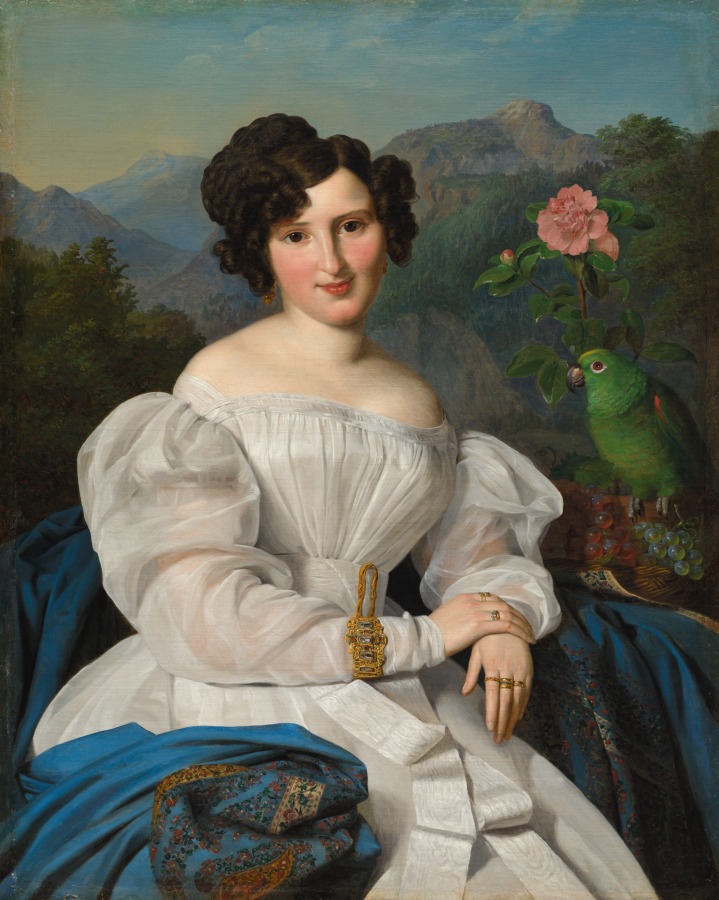
Countess Széchenyi (1828) is in the Cleveland Museum of Art collection. The museum's creator attribution is Ferdinand Georg Waldmüller (Austrian, 1793–1865).
The work and its context
The museum's open-access catalogue describes the work:
This portrait typifies painting in Vienna between 1815 and 1865, an era known as the Biedermeier period, during which the Habsburg government promoted positive artistic depictions of Viennese life and culture. The mountains in the background express both the artist's romantic fascination with nature and patriotic devotion to his Austrian homeland. The sitter, Crescentia Seilern, was a prestigious member of the aristocracy who married Hungarian reformist patriot István Széchenyi.
Object facts
- Title: Countess Széchenyi
- Date: 1828
- Creator attribution: Ferdinand Georg Waldmüller (Austrian, 1793–1865)
- Culture: Austria
- Type: Painting
- Technique: oil on fabric
- Dimensions: Framed: 121.5 x 102 x 10.5 cm (47 13/16 x 40 3/16 x 4 1/8 in.); Unframed: 97.8 x 78.5 cm (38 1/2 x 30 7/8 in.)
- Collection: Mod Euro - Painting 1800-1960
- Department: Modern European Painting and Sculpture
- Accession number: 1988.57
Collection credit
John L. Severance Fund
Further reading listed by the museum
- David Carrit, Ltd., invoice, July 14, 1988, in CMA curatorial file
- Roman Herzig, email to Victoria Sears Goldman, March 19, 2015, in CMA curatorial file.
- David Carritt, Ltd., painting information sheet, in CMA curatorial file.
View the collection record
See the museum's photographs and full catalogue entry. Catalogue text is reproduced from the Cleveland Museum of Art's open-access data, with HTML formatting removed. This object and its supplied image are designated CC0.
Sources
More in Lifestyle
Keep reading