Crucified Man (1550): Art, History and Details
Crucified Man at the Cleveland Museum of Art: 1550, engraving. Explore the work's context, creator attribution and collection history.
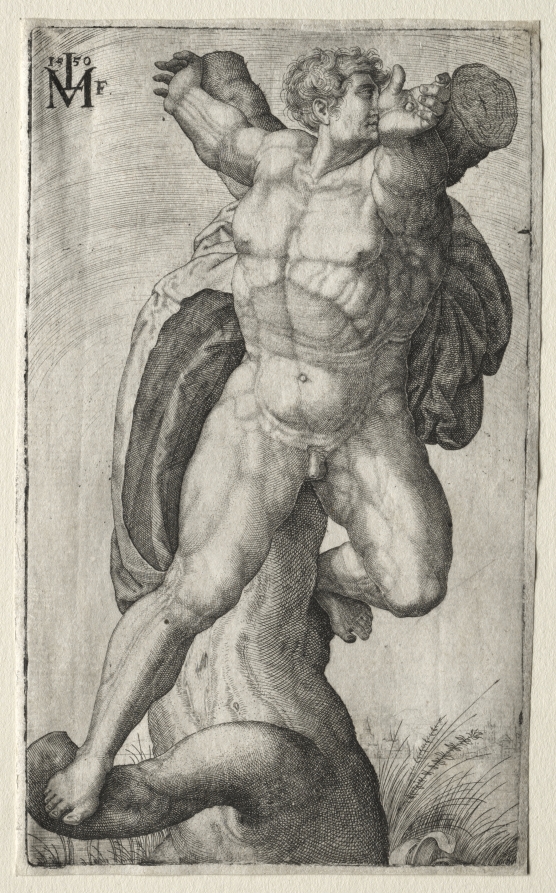
Crucified Man (1550) is in the Cleveland Museum of Art collection. The museum's creator attribution is Melchior Lorck (Danish, 1526/27–after 1588); Michelangelo Buonarroti (Italian, 1475–1564).
The work and its context
The museum's open-access catalogue describes the work:
In this print Danish artist Melchior Lorck isolated the figure of the Old Testament villain Haman from Michelangelo’s Sistine Chapel ceiling. Lorck may have seen it in person, or in a print or drawing. He rendered the musculature and outline carefully, but less successful were his grasp of the figure’s foreshortening (the rendering of a figure in perspective), and the proportions of the body in relation to the head. Artists working outside Italy around 1550 still did not generally sketch from live models, nor did they directly study anatomy, which may explain Lorck’s awkward reconciliation of the form.
Object facts
- Title: Crucified Man
- Date: 1550
- Creator attribution: Melchior Lorck (Danish, 1526/27–after 1588); Michelangelo Buonarroti (Italian, 1475–1564)
- Culture: Germany
- Type: Print
- Technique: engraving
- Collection: PR - Engraving
- Department: Prints
- Accession number: 1923.264
Collection credit
Gift of Leonard C. Hanna Jr.
View the collection record
See the museum's photographs and full catalogue entry. Catalogue text is reproduced from the Cleveland Museum of Art's open-access data, with HTML formatting removed. This object and its supplied image are designated CC0.
Sources
More in Lifestyle
Keep reading