Crucifixion (c. 1680): Art, History and Details
Crucifixion at the Cleveland Museum of Art: c. 1680, terracotta. Explore the work's context, creator attribution and collection history.
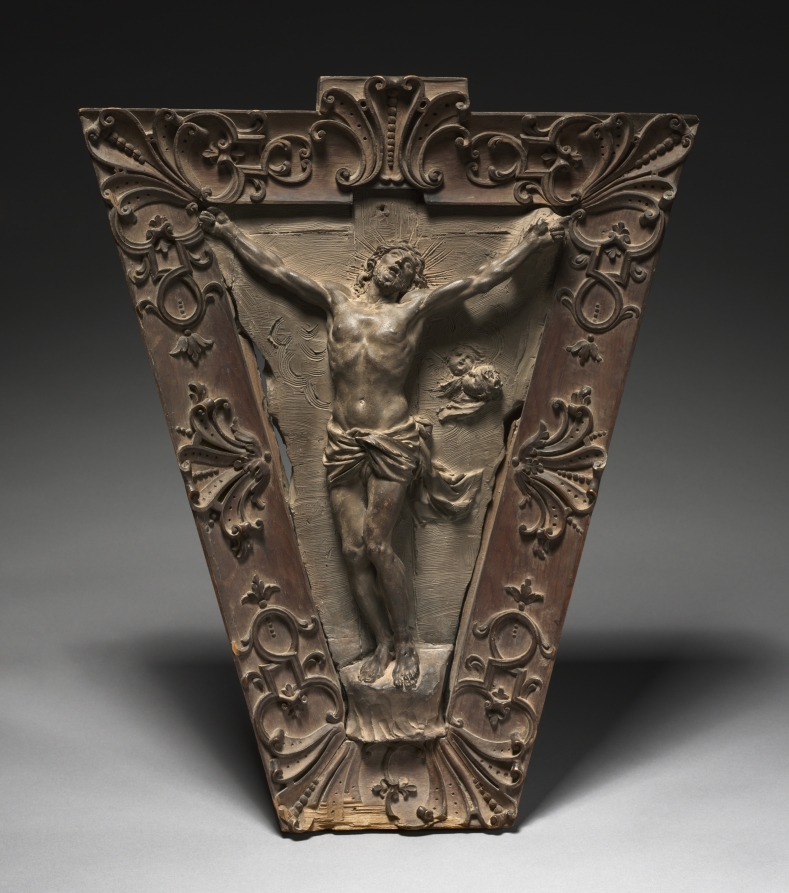
Crucifixion (c. 1680) is in the Cleveland Museum of Art collection.
The work and its context
The museum's open-access catalogue describes the work:
This work is quite atypical for the period due to its physiognomy and composition: Christ's figure is stout in comparison to the slender, elongated figures more common at the time. This effect is compounded by the tight focus of the composition; the artist emphasizes Christ by minimizing background and ornamentation. The design is adapted from an engraving after Charles Le Brun (1619–1690) who studied in Rome and became primary painter to Louis XIV of France. The innovative, simplistic approach of the relief contrasts to the style that Le Brun championed as head of the French Academy. Scholars dispute the legitimacy of the frame as original to the piece, due to its emphatic decoration compared to the solemn relief.
Object facts
- Title: Crucifixion
- Date: c. 1680
- Culture: (Southern?) France, 17th century
- Type: Sculpture
- Technique: terracotta
- Dimensions: Overall: 38.8 x 26.1 cm (15 1/4 x 10 1/4 in.)
- Collection: Sculpture
- Department: European Painting and Sculpture
- Accession number: 1966.363
Collection credit
Norman O. Stone and Ella A. Stone Memorial Fund
View the collection record
See the museum's photographs and full catalogue entry. Catalogue text is reproduced from the Cleveland Museum of Art's open-access data, with HTML formatting removed. This object and its supplied image are designated CC0.
Sources
More in Lifestyle
Keep reading