Cultivated Medlar (Mespilus germanica) (c. 1800): Art, History and Details
Cultivated Medlar (Mespilus germanica) at the Cleveland Museum of Art: c. 1800, stipple and roulette. Explore the work's context, creator attribution and collection history.
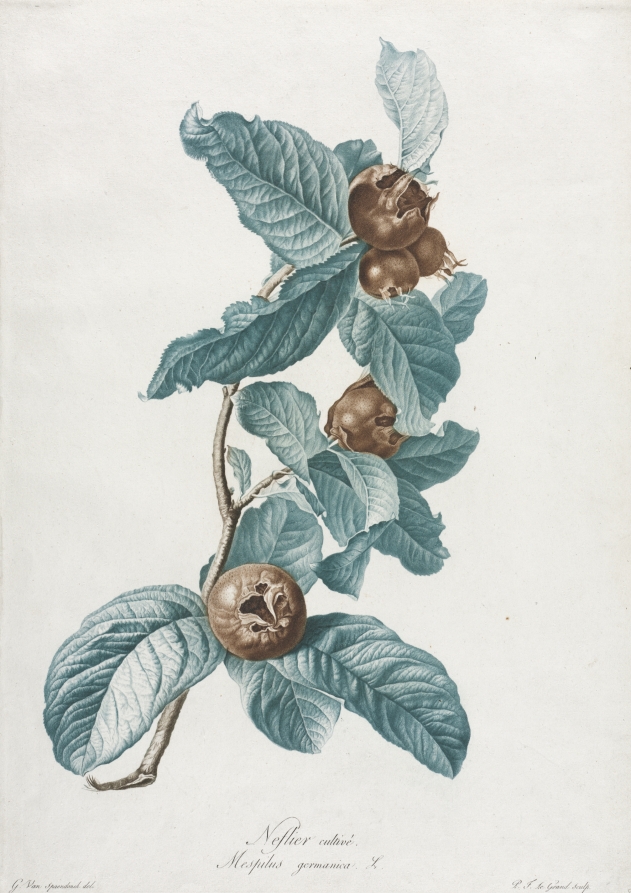
Cultivated Medlar (Mespilus germanica) (c. 1800) is in the Cleveland Museum of Art collection. The museum's creator attribution is Gerard van Spaendonck (Dutch, 1746–1822).
The work and its context
The museum's open-access catalogue describes the work:
The brown and blue-green inks were printed à la poupée. Instead of making a plate for each color, a single plate is selectively inked in different colors using stumps of rags, known as dolls (poupée in French), so that the complete design is printed at one time. Since this process is laborious, the plate was most often colored by hand with watercolor, like the right-hand impression. The printed color, however, creates a more beautiful effect, because all of the subtleties of the shading are evident. In comparison, the watercolor camouflages some of the finest detail.
Object facts
- Title: Cultivated Medlar (Mespilus germanica)
- Date: c. 1800
- Creator attribution: Gerard van Spaendonck (Dutch, 1746–1822)
- Culture: Netherlands, late 18th-early 19th Century
- Type: Print
- Technique: stipple and roulette
- Collection: PR - Stipple
- Department: Prints
- Accession number: 1939.289
Collection credit
Gift of The Print Club of Cleveland, for the Donald Gray Memorial Collection
View the collection record
See the museum's photographs and full catalogue entry. Catalogue text is reproduced from the Cleveland Museum of Art's open-access data, with HTML formatting removed. This object and its supplied image are designated CC0.
Sources
More in Lifestyle
Keep reading