Cup (c. 900–600 BCE): Art, History and Details
Cup at the Cleveland Museum of Art: c. 900–600 BCE, steatite. Explore the work's context, creator attribution and collection history.
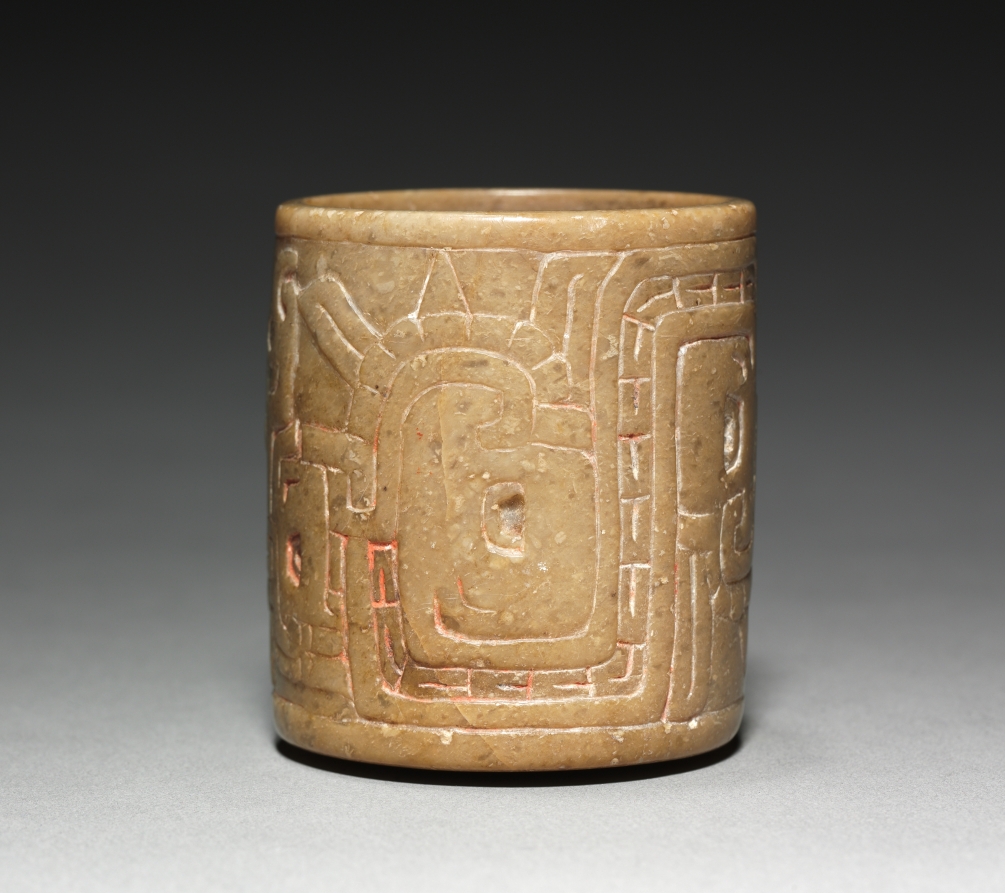
Cup (c. 900–600 BCE) is in the Cleveland Museum of Art collection.
The work and its context
The museum's open-access catalogue describes the work:
While Chavín held sway in the highlands, coastal artists produced many objects in non-Chavín styles. Such is the case with these small, finely carved, stone containers, which were part of north coast ritual paraphernalia, though their specific use is unclear. Both bear complex designs based on fanged heads in profile that lack lower jaws.
Object facts
- Title: Cup
- Date: c. 900–600 BCE
- Culture: Peru, North Coast, Cupisnique style
- Type: Stone
- Technique: steatite
- Dimensions: Overall: 6 x 5.3 cm (2 3/8 x 2 1/16 in.)
- Collection: AA - Andes
- Department: Art of the Americas
- Accession number: 1954.797
Collection credit
John L. Severance Fund
Further reading listed by the museum
- Milliken, William. "Two Chavin Vessels." The Bulletin of the Cleveland Museum of Art 42, no. 9 (November 1955): 203-205.
View the collection record
See the museum's photographs and full catalogue entry. Catalogue text is reproduced from the Cleveland Museum of Art's open-access data, with HTML formatting removed. This object and its supplied image are designated CC0.
Sources
More in Lifestyle
Keep reading