Curule (Folding) Chair (c. 1450–1500): Art, History and Details
Curule (Folding) Chair at the Cleveland Museum of Art: c. 1450–1500, forged iron. Explore the work's context, creator attribution and collection history.
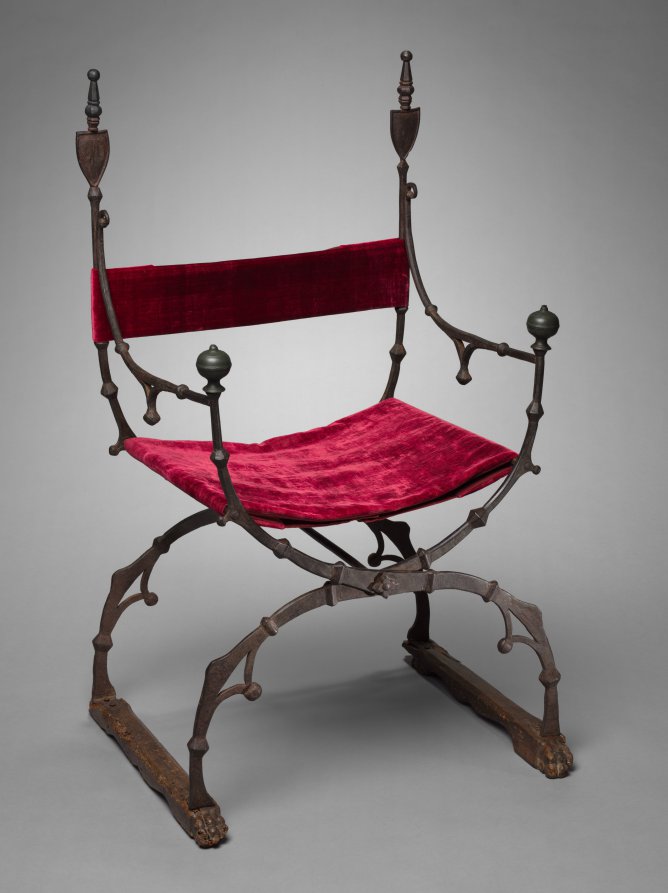
Curule (Folding) Chair (c. 1450–1500) is in the Cleveland Museum of Art collection.
The work and its context
The museum's open-access catalogue describes the work:
This is a rare example of a Renaissance folding chair. It was intended to be lightweight and easily portable so that it could be folded and transported from room to room or even house to house. They were likely used in Italian homes, though they may have also been favored by scholars and clerics for use in their studies. Their portability also made them useful for extended travel. The fabric is a modern replacement.
Object facts
- Title: Curule (Folding) Chair
- Date: c. 1450–1500
- Culture: Italy, Florence?, 15th century
- Type: Furniture and woodwork
- Technique: forged iron
- Dimensions: Overall: 106.7 x 63.5 x 54.6 cm (42 x 25 x 21 1/2 in.)
- Collection: MED - Renaissance
- Department: Medieval Art
- Accession number: 1949.201
Collection credit
John L. Severance Fund
Further reading listed by the museum
- The Brummer Gallery Records. Cloisters (Museum), n.d.
View the collection record
See the museum's photographs and full catalogue entry. Catalogue text is reproduced from the Cleveland Museum of Art's open-access data, with HTML formatting removed. This object and its supplied image are designated CC0.
Sources
More in Lifestyle
Keep reading