Daniel in the Lion's Den (c. 1125–50): Art, History and Details
Daniel in the Lion's Den at the Cleveland Museum of Art: c. 1125–50, limestone. Explore the work's context, creator attribution and collection history.
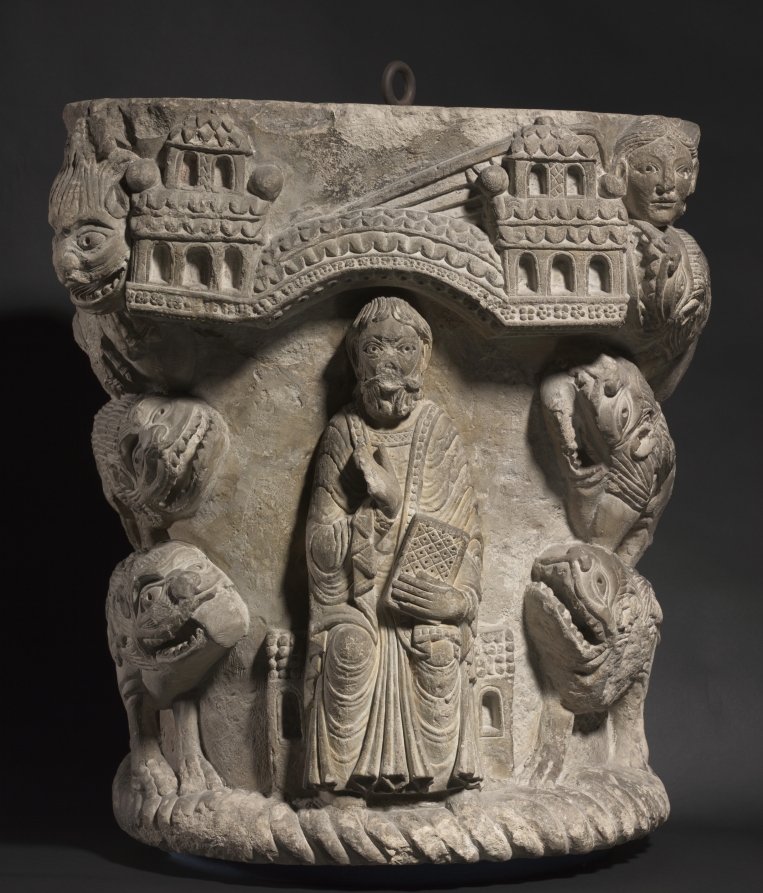
Daniel in the Lion's Den (c. 1125–50) is in the Cleveland Museum of Art collection.
The work and its context
The museum's open-access catalogue describes the work:
According to the Old Testament, Daniel was cast into a lion’s den as punishment for his belief in a single god, but he was miraculously delivered from harm on account of his faith. This story is related here, with Daniel flanked by lions and the angel sent by God to save him. Together with other decorated capitals, this imposing work of Romanesque sculpture once decorated the interior of the church of Saint-Aignan-sur-Cher, a city in central France.
Object facts
- Title: Daniel in the Lion's Den
- Date: c. 1125–50
- Culture: France, Saint-Aignan-sur-Cher, 12th century
- Type: Sculpture
- Technique: limestone
- Dimensions: Overall: 72.4 x 68.6 x 36.2 cm (28 1/2 x 27 x 14 1/4 in.)
- Collection: MED - Romanesque
- Department: Medieval Art
- Accession number: 1962.247
A detail from the museum
During the 12th century, churches used images to teach the faithful who were illiterate. While Daniel lived before Jesus, he is depicted holding a bible, alluding to the continuity between the Old and New Testaments.
Collection credit
Purchase from the J. H. Wade Fund
Further reading listed by the museum
- "Demote's Gift of Gothic Sculpture," Minneapolis Institute of Art Bulletin 12 (March 1923).
- "Recent Gift of Early French Sculpture" Minneapolis Institute of Art Bulletin 12 (April 1923).
- Green, Rosalie B. Daniel in the Lions' Den As an Example of Romanesque Typology. 1948.
View the collection record
See the museum's photographs and full catalogue entry. Catalogue text is reproduced from the Cleveland Museum of Art's open-access data, with HTML formatting removed. This object and its supplied image are designated CC0.
Sources
More in Lifestyle
Keep reading