Design for a Chalice (recto) (mid-1500s): Art, History and Details
Design for a Chalice (recto) at the Cleveland Museum of Art: mid-1500s, Black chalk, pen and brown ink, and brown wash, over black chalk, on laid paper. Explore the work's context, creator attribution and collection history.
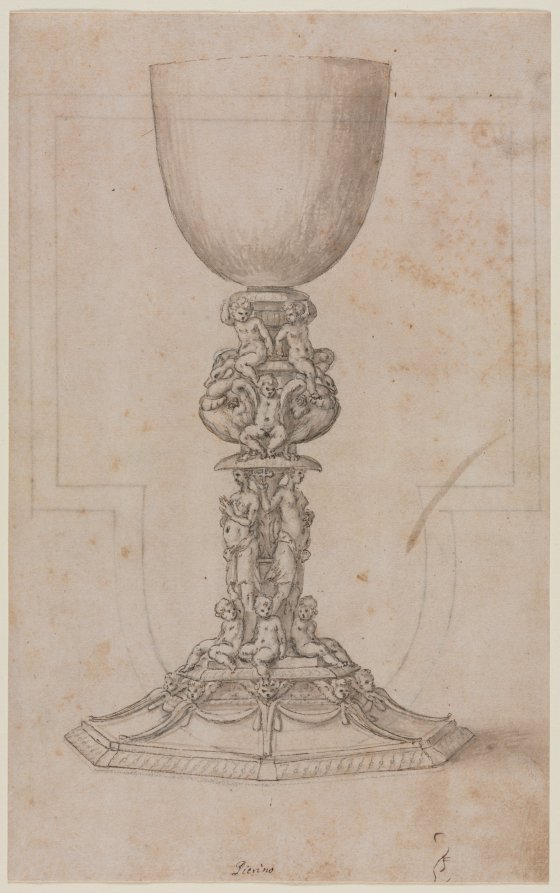
Design for a Chalice (recto) (mid-1500s) is in the Cleveland Museum of Art collection. The museum's creator attribution is Luzio Romano (Italian, active 1528–75).
The work and its context
The museum's open-access catalogue describes the work:
An assistant to influential Renaissance designer Perino del Vaga (1501–1547), Luzio Romano is known primarily through the drawings he made for liturgical objects (objects used for public worship), such as this chalice, likely a goldsmith’s design. The foot is decorated with seraphim—the highest order of angels—and nude children below figures of women and pelicans on the base of the bowl, which together allude to the theological virtue of charity. A pelican piercing its breast to feed its young with its blood is also a symbol of Christ’s sacrifice on the cross, fitting for a vessel meant to hold the eucharistic wine.
Object facts
- Title: Design for a Chalice (recto)
- Date: mid-1500s
- Creator attribution: Luzio Romano (Italian, active 1528–75)
- Culture: Italy
- Type: Drawing
- Technique: Black chalk, pen and brown ink, and brown wash, over black chalk, on laid paper
- Dimensions: Sheet: 32.1 x 20 cm (12 5/8 x 7 7/8 in.)
- Collection: DR - Italian
- Department: Drawings
- Accession number: 1924.587.a
Collection credit
Dudley P. Allen Fund
View the collection record
See the museum's photographs and full catalogue entry. Catalogue text is reproduced from the Cleveland Museum of Art's open-access data, with HTML formatting removed. This object and its supplied image are designated CC0.
Sources
More in Lifestyle
Keep reading