Devi Shrine (c. 1810): Art, History and Details
Devi Shrine at the Cleveland Museum of Art: c. 1810, Gum tempera and gold on paper. Explore the work's context, creator attribution and collection history.
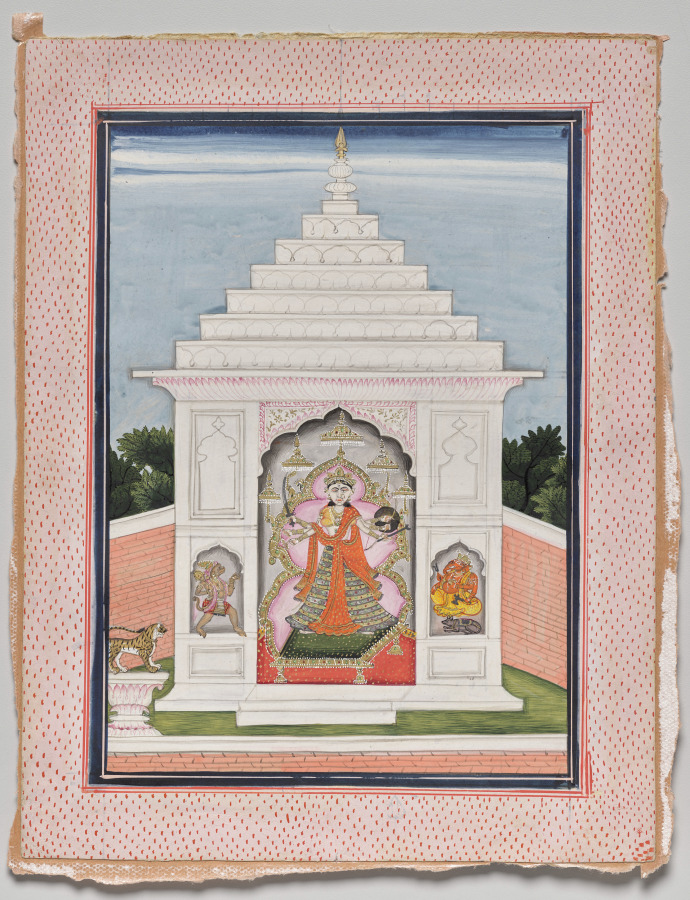
Devi Shrine (c. 1810) is in the Cleveland Museum of Art collection.
The work and its context
The museum's open-access catalogue describes the work:
The sacred space of a Hindu shrine is separated from the everyday world by an enclosure wall. The mount of the goddess, a tiger, perches on a pedestal in front, gazing into the sanctum. On either side of the doorway are the monkey god Hanuman and the elephant-headed Ganesha seated on his mount, the rat. They ensure protection and success of a devotee’s worship. This powerful six-armed goddess has been dressed and adorned as a living presence. She holds a different weapon in each hand. She offered protection from disease or malevolent forces that endanger children to her devotees.
Object facts
- Title: Devi Shrine
- Date: c. 1810
- Culture: Northern India, Himachal Pradesh, Pahari Kingdom of Mandi
- Type: Painting
- Technique: Gum tempera and gold on paper
- Dimensions: 31.8 x 24.1 cm (12 1/2 x 9 1/2 in.)
- Collection: Indian Art
- Department: Indian and Southeast Asian Art
- Accession number: 2020.80
A detail from the museum
The marble structure with floral inlay derived from Islamic architecture, though the shrine is Hindu.
Collection credit
Gift of Nancy and Wayne Hunnicutt
Further reading listed by the museum
- Christie's South Kensington. Arts & Textiles of the Islamic & Indian Worlds. October 9, 2015. Lot 8.
View the collection record
See the museum's photographs and full catalogue entry. Catalogue text is reproduced from the Cleveland Museum of Art's open-access data, with HTML formatting removed. This object and its supplied image are designated CC0.
Sources
More in Lifestyle
Keep reading