Dish (c. 1904–16): Art, History and Details
Dish at the Cleveland Museum of Art: c. 1904–16, bowenite, silver. Explore the work's context, creator attribution and collection history.
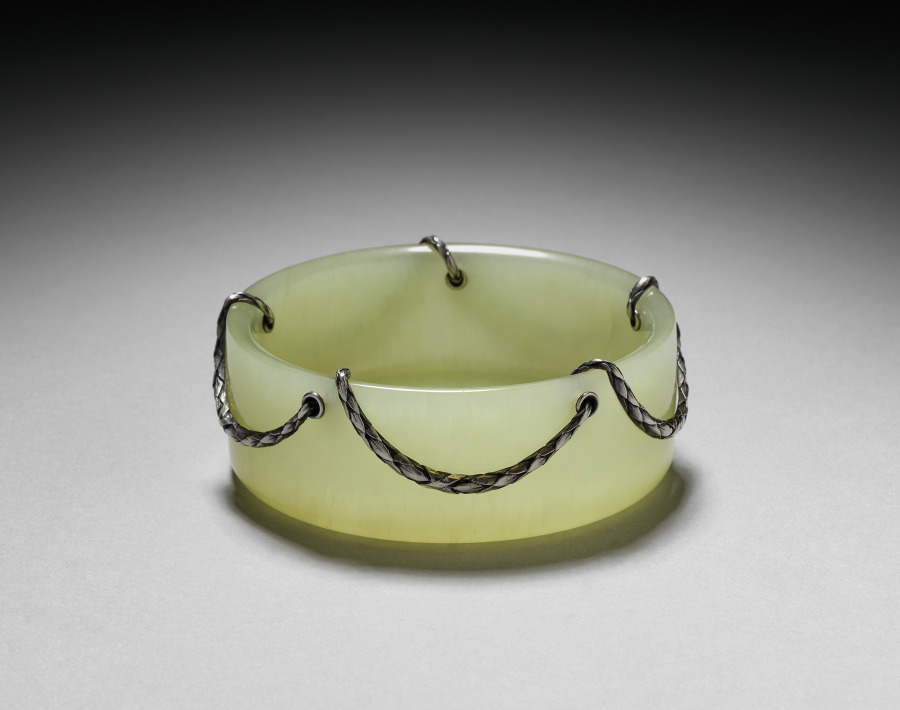
Dish (c. 1904–16) is in the Cleveland Museum of Art collection. The museum's creator attribution is House of Fabergé (Russian, 1842–1918); Hjalmar Armfelt (Finnish, 1873–1959).
The work and its context
The museum's open-access catalogue describes the work:
The House of Fabergé specialized in the creation of little treasures intended as opulent personal gifts. In creating luxurious accessories for a desk or tabletop, Fabergé often used native hardstones such as multicolored agate and quartz, green nephrite, pink rhodonite, rock crystal, and pale green bowenite found in the Ural Mountains of western Russia. Fabergé's designers often paired hardstones with silver mounts, particularly in the Moscow workshop where the company's silversmiths were concentrated.
Object facts
- Title: Dish
- Date: c. 1904–16
- Creator attribution: House of Fabergé (Russian, 1842–1918); Hjalmar Armfelt (Finnish, 1873–1959)
- Type: Silver
- Technique: bowenite, silver
- Dimensions: Overall: 7.6 cm (3 in.)
- Collection: Decorative Arts
- Department: Decorative Art and Design
- Accession number: 2022.112
A detail from the museum
Sometimes called "new jade," bowenite is actually considered a semiprecious gemstone. Though Fabergé obtained his supply from the Ural Mountains of Russia, bowenite is also the state mineral of Rhode Island.
Collection credit
Gift of the Hiller-Borneman Collection
View the collection record
See the museum's photographs and full catalogue entry. Catalogue text is reproduced from the Cleveland Museum of Art's open-access data, with HTML formatting removed. This object and its supplied image are designated CC0.
Sources
More in Lifestyle
Keep reading