Domestic Shrine (c. 1479–1425 BCE): Art, History and Details
Domestic Shrine at the Cleveland Museum of Art: c. 1479–1425 BCE, limestone, originally painted. Explore the work's context, creator attribution and collection history.
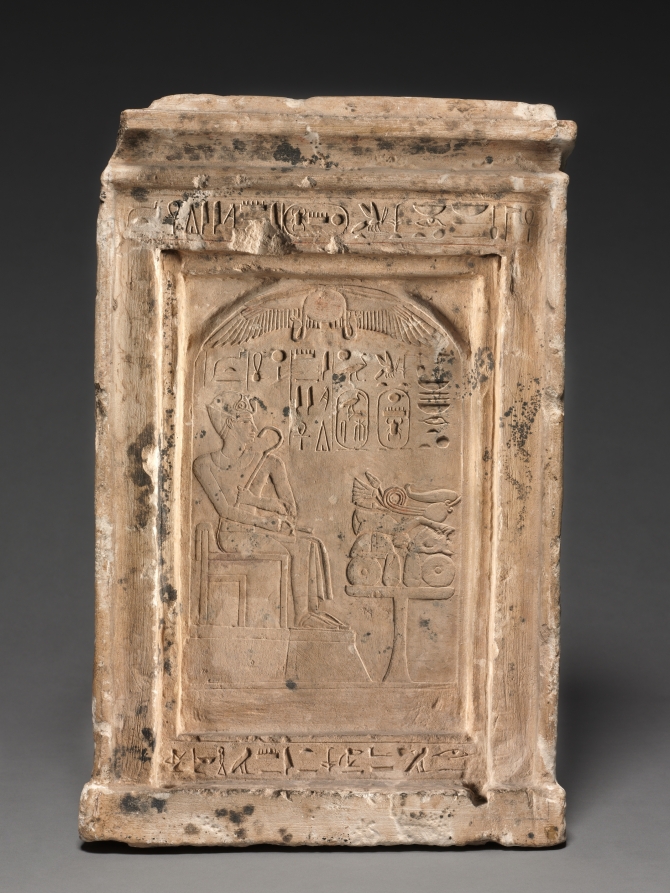
Domestic Shrine (c. 1479–1425 BCE) is in the Cleveland Museum of Art collection.
The work and its context
The museum's open-access catalogue describes the work:
Used in the home like an icon, this shrine was originally provided with two wooden doors, hinged at each side and bolted in the center. The upper and lower sockets for the pivots of these doors still survive. The worshiper opened the doors to reveal the representation of King Tuthmosis III seated in front of an offering table. The hieroglyphic inscription at the base tells us that the shrine was made for the tomb worker Amenemheb. The carving is clearly in the style of Tuthmosis III’s reign, showing that such objects of private veneration were produced during the king‘s lifetime.
Object facts
- Title: Domestic Shrine
- Date: c. 1479–1425 BCE
- Culture: Egypt, Thebes(?), New Kingdom (1540–1069 BCE), Dynasty 18, reign of Tuthmosis III (1479–1425 BCE)
- Type: Sculpture
- Technique: limestone, originally painted
- Dimensions: Overall: 42.4 x 27.4 x 9 cm (16 11/16 x 10 13/16 x 3 9/16 in.)
- Collection: Egypt - New Kingdom
- Department: Egyptian and Ancient Near Eastern Art
- Accession number: 1920.2002
Collection credit
Gift of the John Huntington Art and Polytechnic Trust
Further reading listed by the museum
- Cooney, John D. “Some Antiquities from Thebes.” The Bulletin of the Cleveland Museum of Art 52, no. 1 (January 1965): 2–6.
- Berman, Lawrence M., and Kenneth J. Bohač. Catalogue of Egyptian Art: The Cleveland Museum of Art. Cleveland, OH: Cleveland Museum of Art, 1999
View the collection record
See the museum's photographs and full catalogue entry. Catalogue text is reproduced from the Cleveland Museum of Art's open-access data, with HTML formatting removed. This object and its supplied image are designated CC0.
Sources
More in Lifestyle
Keep reading