Double-Faced Crossbar from a Railing (c. 150 BCE): Art, History and Details
Double-Faced Crossbar from a Railing at the Cleveland Museum of Art: c. 150 BCE, plum-colored sandstone. Explore the work's context, creator attribution and collection history.
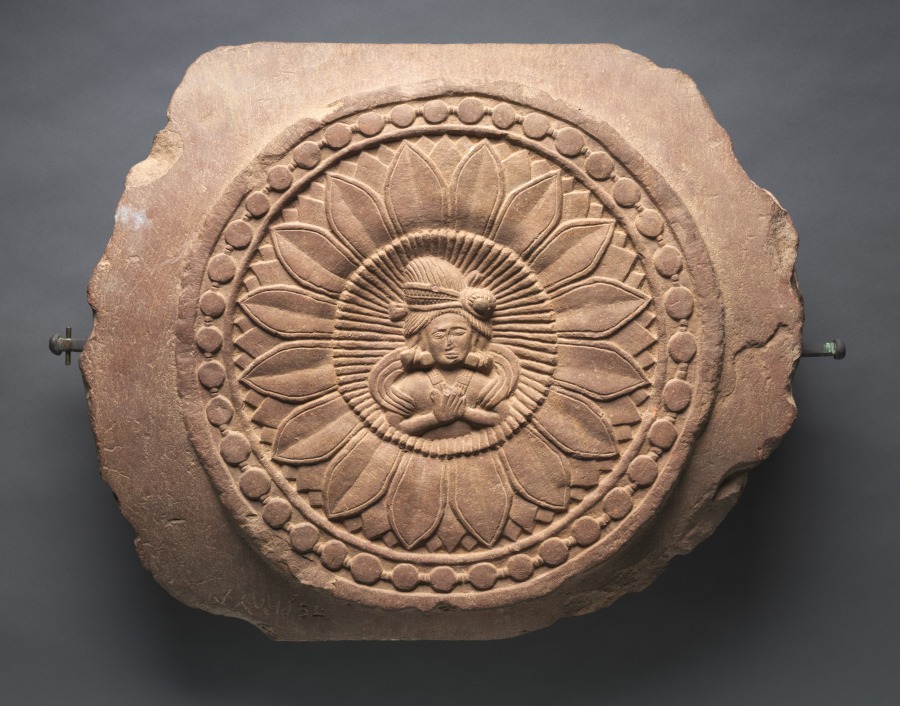
Double-Faced Crossbar from a Railing (c. 150 BCE) is in the Cleveland Museum of Art collection.
The work and its context
The museum's open-access catalogue describes the work:
This lens-shaped section of a crossbar is from one of the the earliest known Buddhist monuments in India to be embellished with stone relief carvings. It is from a circular fence that surrounded a stupa and demarcated the sacred space from the outside world.
Object facts
- Title: Double-Faced Crossbar from a Railing
- Date: c. 150 BCE
- Culture: India, Madhya Pradesh, Bharhut, Shunga period
- Type: Sculpture
- Technique: plum-colored sandstone
- Dimensions: Overall: 55.9 x 66 cm (22 x 26 in.)
- Collection: Indian Art - Sunga, Bharhut
- Department: Indian and Southeast Asian Art
- Accession number: 1982.44
Collection credit
The Severance and Greta Millikin Purchase Fund
Further reading listed by the museum
- Pal, Pratapaditya. The Sensuous Immortals: A Selection of Sculptures from the Pan-Asian Collection. Los Angeles: Los Angeles County Museum of Art, 1977.
- Lee, Sherman E. "Year in Review for 1982." The Bulletin of the Cleveland Museum of Art 70, no. 1 (1983): 3-55.
- Clarke, Victoria. Flower: Exploring the World in Bloom. London; New York : Phaidon Press Limited, 2020.
View the collection record
See the museum's photographs and full catalogue entry. Catalogue text is reproduced from the Cleveland Museum of Art's open-access data, with HTML formatting removed. This object and its supplied image are designated CC0.
Sources
More in Lifestyle
Keep reading