Double-Sided Leaf from a Qur'an (1100s): Art, History and Details
Double-Sided Leaf from a Qur'an at the Cleveland Museum of Art: 1100s, opaque watercolor, ink, and gold on paper. Explore the work's context, creator attribution and collection history.
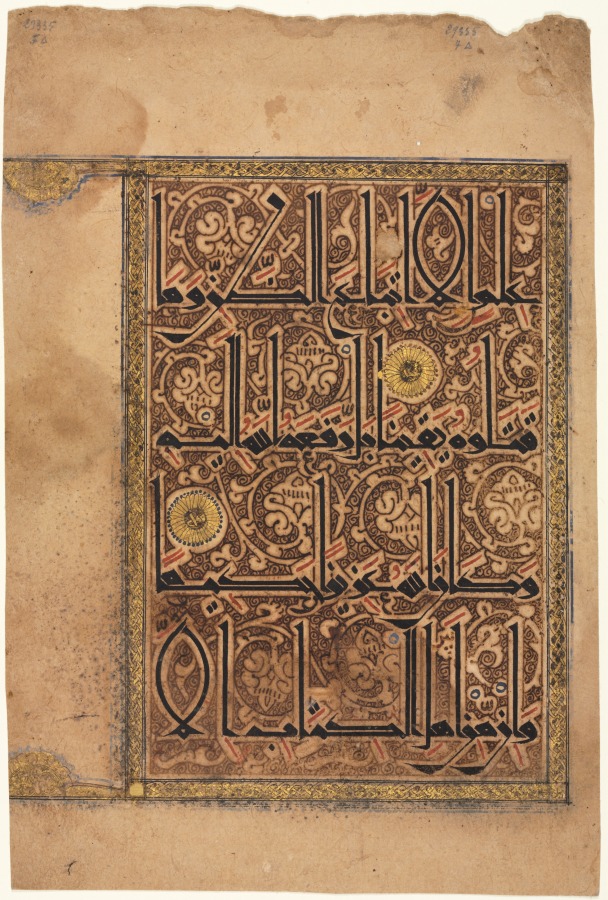
Double-Sided Leaf from a Qur'an (1100s) is in the Cleveland Museum of Art collection.
The work and its context
The museum's open-access catalogue describes the work:
Arabic calligraphy, the art of beautiful writing, was elevated above all other art forms in the Islamic world because Allah, or God, revealed the divine word of Islam to the Prophet Muhammad (570–632) in the Arabic language. This Qur'an page is considered one of the most splendid examples of Arabic calligraphy. Based on the proportions of Arabic letters, majestic eastern Kufic script features attenuated letters with long upstrokes and low strokes swaying to the left. Contours echoing the letters separate the sacred text from the lively arabesque background. This vertical layout on paper replaces the earlier horizontal format on parchment.
Object facts
- Title: Double-Sided Leaf from a Qur'an
- Date: 1100s
- Culture: Seljuk Iran
- Type: Manuscript
- Technique: opaque watercolor, ink, and gold on paper
- Dimensions: Sheet: 32 x 21.3 cm (12 5/8 x 8 3/8 in.)
- Collection: Islamic Art
- Department: Islamic Art
- Accession number: 1939.507
A detail from the museum
Calligraphers and poets enjoyed higher status than painters and architects in Islamic countries.
Collection credit
Purchase from the J. H. Wade Fund
Further reading listed by the museum
- Gertsman, Elina and Barbara H. Rosenwein. The Middle Ages in 50 Objects. Cambridge: Cambridge University Press, 2018.
View the collection record
See the museum's photographs and full catalogue entry. Catalogue text is reproduced from the Cleveland Museum of Art's open-access data, with HTML formatting removed. This object and its supplied image are designated CC0.
Sources
More in Lifestyle
Keep reading