Horus Falcon (664–30 BCE OR 664–330 BCE): Art, History and Details
Horus Falcon at the Cleveland Museum of Art: 664–30 BCE OR 664–330 BCE, bronze, solid cast. Explore the work's context, creator attribution and collection history.
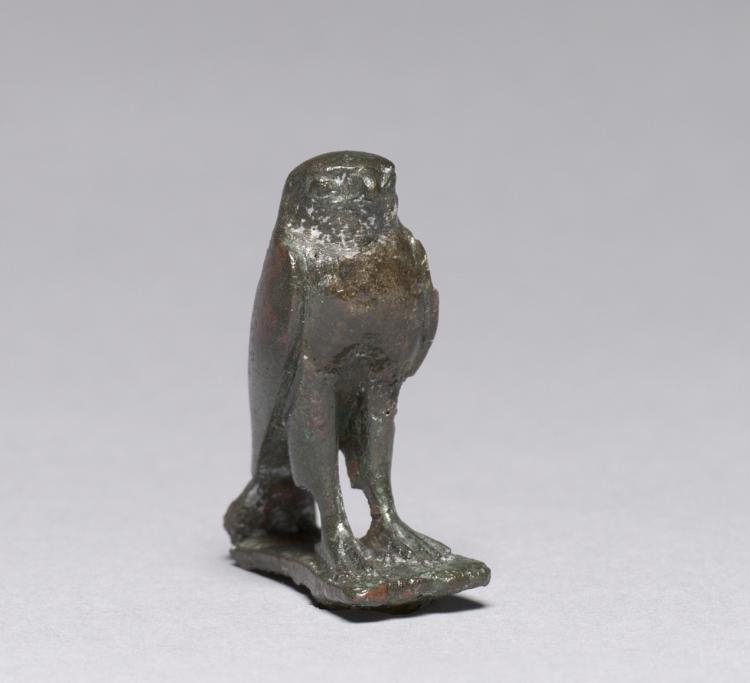
Horus Falcon (664–30 BCE OR 664–330 BCE) is in the Cleveland Museum of Art collection.
The work and its context
The museum's open-access catalogue describes the work:
The falcon stands in hieroglyphic form—body erect, feet together—on a thin, oblong base with a tang beneath. The eye and beak are the only areas with incised details. Numerous such images of this important bird, an age-old symbol of Egyptian kingship, survive.
Object facts
- Title: Horus Falcon
- Date: 664–30 BCE OR 664–330 BCE
- Culture: Egypt, Late period (715–332 BCE), Dynasty 26 or later
- Type: Sculpture
- Technique: bronze, solid cast
- Dimensions: Overall: 4.6 x 1.4 x 3.3 cm (1 13/16 x 9/16 x 1 5/16 in.)
- Collection: Egypt - Late Period
- Department: Egyptian and Ancient Near Eastern Art
- Accession number: 1940.615
Collection credit
Bequest of James Parmelee
Further reading listed by the museum
- Berman, Lawrence M., and Kenneth J. Bohač. Catalogue of Egyptian Art: The Cleveland Museum of Art. Cleveland, OH: Cleveland Museum of Art, 1999
View the collection record
See the museum's photographs and full catalogue entry. Catalogue text is reproduced from the Cleveland Museum of Art's open-access data, with HTML formatting removed. This object and its supplied image are designated CC0.
Sources
More in Lifestyle
Keep reading