Double-Sided Votive Relief (305–30 BCE): Art, History and Details
Double-Sided Votive Relief at the Cleveland Museum of Art: 305–30 BCE, limestone. Explore the work's context, creator attribution and collection history.
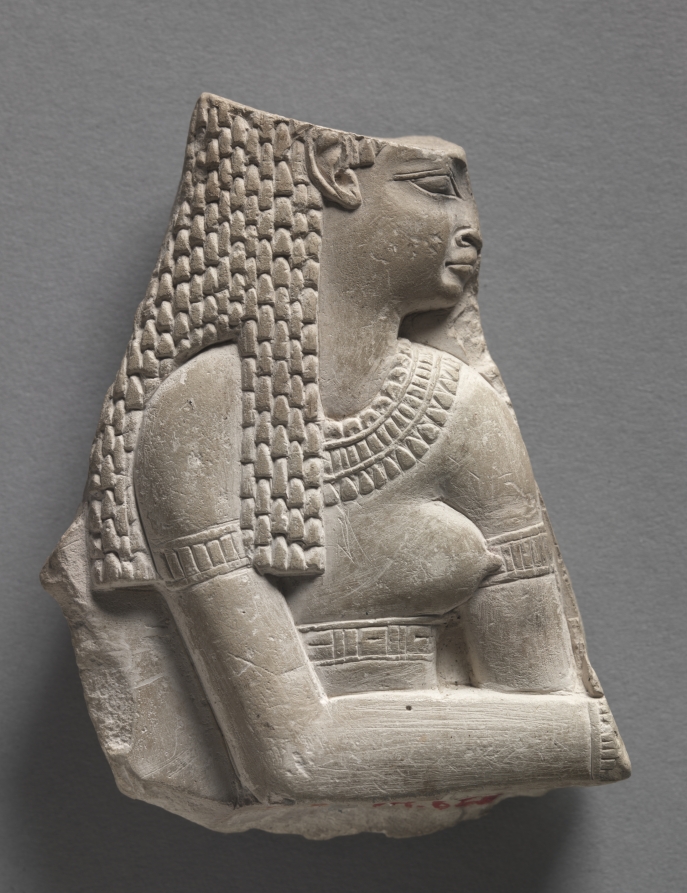
Double-Sided Votive Relief (305–30 BCE) is in the Cleveland Museum of Art collection.
The work and its context
The museum's open-access catalogue describes the work:
Trial pieces—carved on limestone flakes, or ostraca—and sculptors' models allow us to see how the ancient Egyptian artist approached his work. Showing a wild dog's head on one side and a profile figure on the other, these pieces are masterpieces in their own right, and were probably meant to be copied.
Object facts
- Title: Double-Sided Votive Relief
- Date: 305–30 BCE
- Culture: Egypt, Greco-Roman period (332 BCE–395 CE), Ptolemaic dynasty (305–30 BCE)
- Type: Sculpture
- Technique: limestone
- Dimensions: Overall: 8.3 x 6.5 x 1.4 cm (3 1/4 x 2 9/16 x 9/16 in.)
- Collection: Egypt - Ptolemaic Dynasty
- Department: Egyptian and Ancient Near Eastern Art
- Accession number: 1914.666
Collection credit
Gift of the John Huntington Art and Polytechnic Trust
Further reading listed by the museum
- Berman, Lawrence M., and Kenneth J. Bohač. Catalogue of Egyptian Art: The Cleveland Museum of Art. Cleveland, OH: Cleveland Museum of Art, 1999
View the collection record
See the museum's photographs and full catalogue entry. Catalogue text is reproduced from the Cleveland Museum of Art's open-access data, with HTML formatting removed. This object and its supplied image are designated CC0.
Sources
More in Lifestyle
Keep reading
Related stories


