Duck's Head from a Large Curtain (200s CE): Art, History and Details
Duck's Head from a Large Curtain at the Cleveland Museum of Art: 200s CE, tapestry weave: wool. Explore the work's context, creator attribution and collection history.
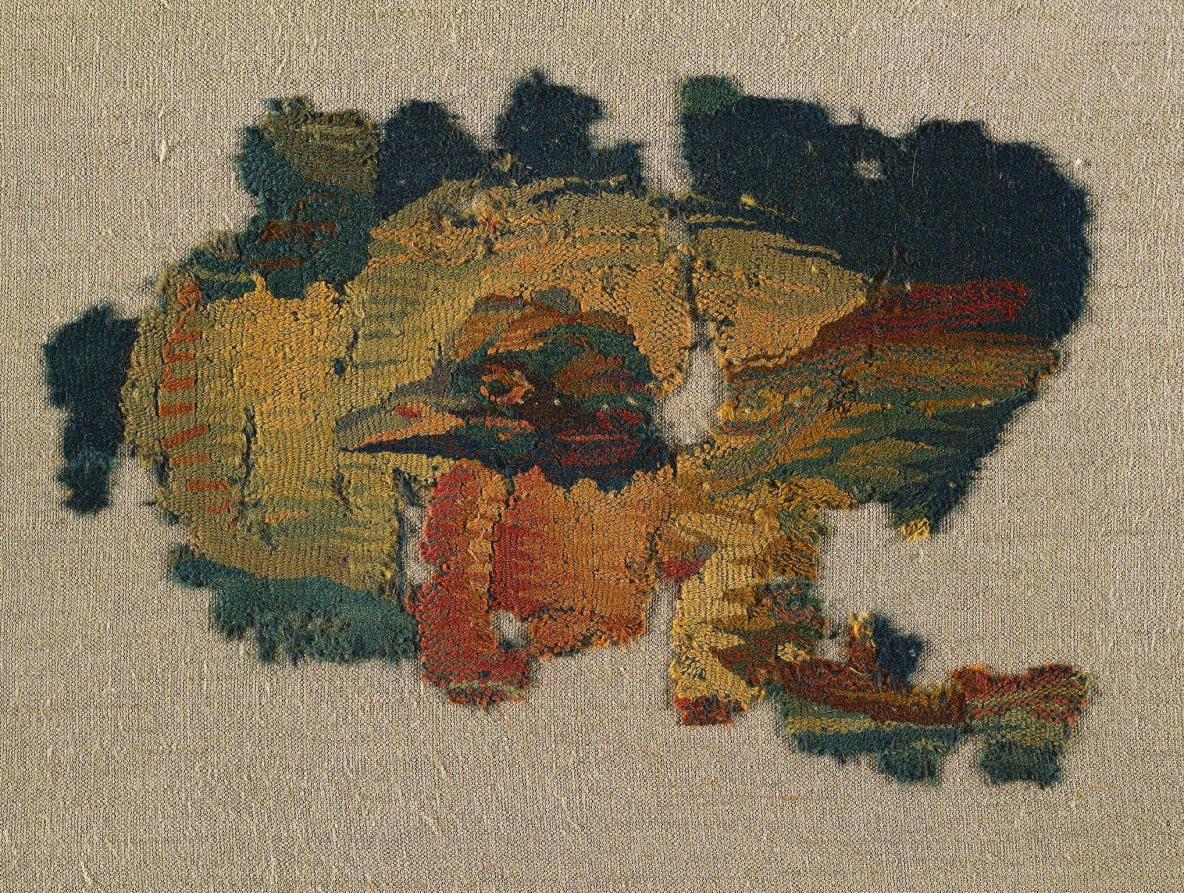
Duck's Head from a Large Curtain (200s CE) is in the Cleveland Museum of Art collection.
The work and its context
The museum's open-access catalogue describes the work:
As creatures seen on Egypt's Nile River, ducks represent the abundance of life. The effects of shading and modeling are visible in the duck's head, which stands out against a background of sparkling water. The image is rendered in tapestry weave with wool dyed distinctive colors, several of which are combined, such as blue and red, and coral and blue-green on the right side, as if painted with dyed threads. While not common, scenes of aquatic life inspired by the Nile were celebrated in Coptic textiles. Typical of luxury curtains and hangings, the fragment is woven entirely with wool.
Object facts
- Title: Duck's Head from a Large Curtain
- Date: 200s CE
- Culture: Egypt, Byzantine period
- Type: Textile
- Technique: tapestry weave: wool
- Dimensions: Overall: 15.9 x 23.5 cm (6 1/4 x 9 1/4 in.)
- Collection: T - Coptic
- Department: Textiles
- Accession number: 1950.512
Collection credit
John L. Severance Fund
View the collection record
See the museum's photographs and full catalogue entry. Catalogue text is reproduced from the Cleveland Museum of Art's open-access data, with HTML formatting removed. This object and its supplied image are designated CC0.
Sources
More in Lifestyle
Keep reading