Elijah and the Widow of Zarephath (c. 1525): Art, History and Details
Elijah and the Widow of Zarephath at the Cleveland Museum of Art: c. 1525, pot-metal and white glass, and silver stain. Explore the work's context, creator attribution and collection history.
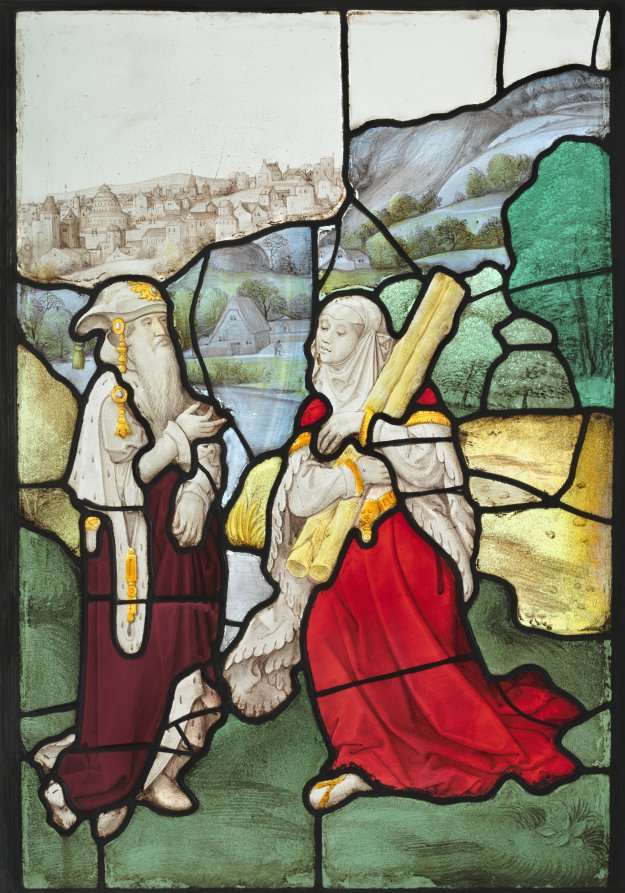
Elijah and the Widow of Zarephath (c. 1525) is in the Cleveland Museum of Art collection.
The work and its context
The museum's open-access catalogue describes the work:
As told in I Kings 17:8–24, in the city of Zarephath the prophet Elijah met a widow gathering sticks who gave him food and drink. The widow's son was mortally ill and Elijah carried him upstairs where he "stretched himself upon the child three times" and called upon God. The child was revived.
Object facts
- Title: Elijah and the Widow of Zarephath
- Date: c. 1525
- Culture: North Netherlands, 16th century
- Type: Glass
- Technique: pot-metal and white glass, and silver stain
- Dimensions: Overall: 70.6 x 50.2 cm (27 13/16 x 19 3/4 in.)
- Collection: MED - Gothic
- Department: Medieval Art
- Accession number: 1951.337
Collection credit
Bequest of William G. Mather
Further reading listed by the museum
- Milliken, William, and Henry Francis. "Bequest of William G. Mather." The Bulletin of the Cleveland Museum of Art 38, no. 8 (October 1951): 196-198
View the collection record
See the museum's photographs and full catalogue entry. Catalogue text is reproduced from the Cleveland Museum of Art's open-access data, with HTML formatting removed. This object and its supplied image are designated CC0.
Sources
More in Lifestyle
Keep reading