En no Gyōja with Zenki and Kōki (En no Gyōja) (1615–1868): Art, History and Details
En no Gyōja with Zenki and Kōki (En no Gyōja) at the Cleveland Museum of Art: 1615–1868, wood with paint. Explore the work's context, creator attribution and collection history.
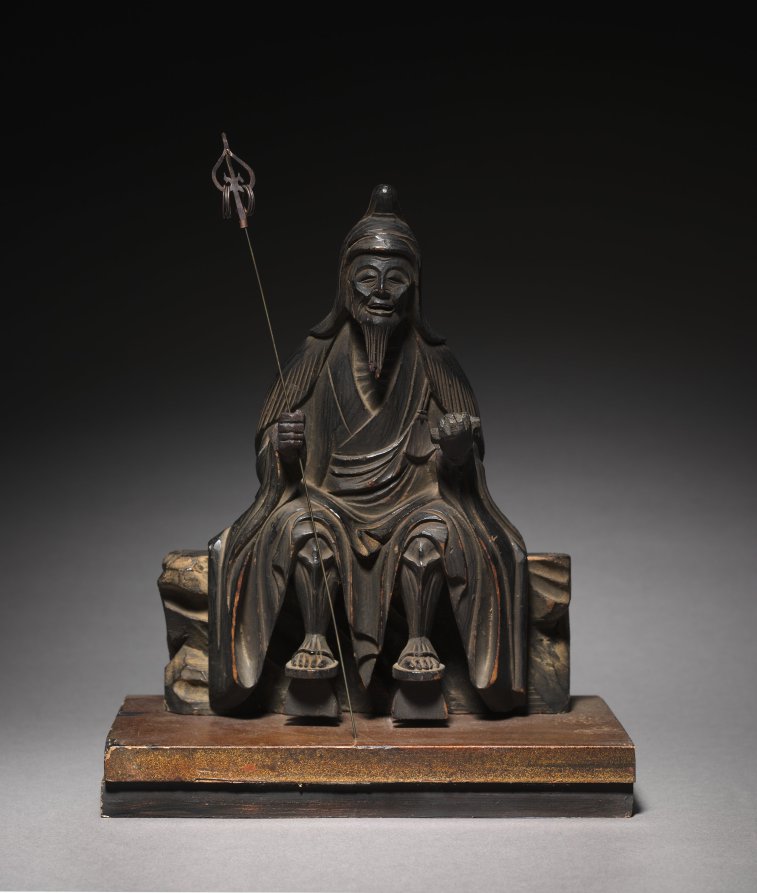
En no Gyōja with Zenki and Kōki (En no Gyōja) (1615–1868) is in the Cleveland Museum of Art collection.
The work and its context
The museum's open-access catalogue describes the work:
This is one of a trio of figures identified as Enno Gyoja and his two attendants, Zenki and Kōki. The set follows the iconography of Shugendo, the traditional mountain ascetic practice in Japan. Enno Gyoja is depicted as a hermit-monk, seated on a rock attached to a modern base. He holds a staff in his right hand and a sutra in the left. The two attendants take the form of half-human, half-demonic figures and are regarded as a married couple.
Object facts
- Title: En no Gyōja with Zenki and Kōki (En no Gyōja)
- Date: 1615–1868
- Culture: Japan, Edo period (1615–1868)
- Type: Sculpture
- Technique: wood with paint
- Dimensions: Overall: 24 x 18 x 11.3 cm (9 7/16 x 7 1/16 x 4 7/16 in.)
- Collection: Japanese Art
- Department: Japanese Art
- Accession number: 2012.73.a
A detail from the museum
These figures' miniaturized format allowed them to be portable devotional statuettes that worshipers could carry as they traveled.
Collection credit
Gift of Yuko Hosomi and Koichi Yanagi
Further reading listed by the museum
- “Art of Asia Acquired by North American Museums, 2011-2012.” Archives of Asian Art, vol. 63, no. 2, 2013, pp. 215–276.
View the collection record
See the museum's photographs and full catalogue entry. Catalogue text is reproduced from the Cleveland Museum of Art's open-access data, with HTML formatting removed. This object and its supplied image are designated CC0.
Sources
More in Lifestyle
Keep reading
Related stories