Eros, the God of Love (1–100 CE): Art, History and Details
Eros, the God of Love at the Cleveland Museum of Art: 1–100 CE, marble. Explore the work's context, creator attribution and collection history.
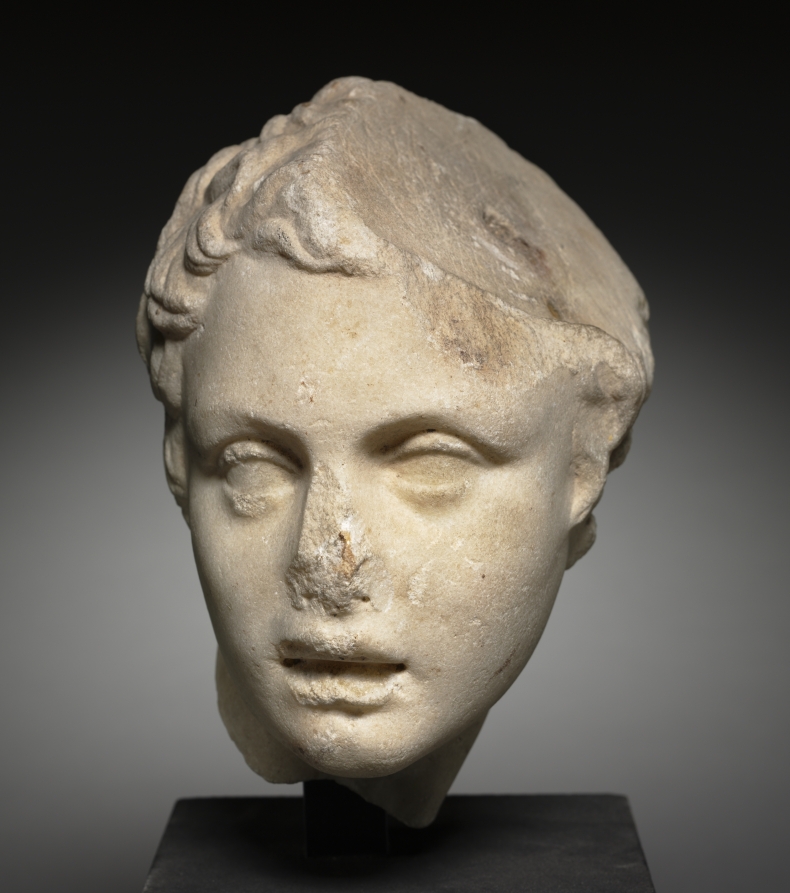
Eros, the God of Love (1–100 CE) is in the Cleveland Museum of Art collection.
The work and its context
The museum's open-access catalogue describes the work:
This is a Roman copy of the statue of Eros by Lysippus, the last of the great sculptors of Greece. He worked in the second half of the fourth century and was court sculptor to Alexander the Great. In the complete statue the god stood naked, his head turned to the right, his hand clasping a bow.
Object facts
- Title: Eros, the God of Love
- Date: 1–100 CE
- Culture: Italy, Roman
- Type: Sculpture
- Technique: marble
- Dimensions: Overall: 22.6 x 15.3 x 17.8 cm (8 7/8 x 6 x 7 in.)
- Collection: GR - Roman
- Department: Greek and Roman Art
- Accession number: 1920.167
A detail from the museum
The oldest versions of Greek myth describe Eros, god of love and desire, as one of the first beings in existence.
Collection credit
Gift of Mrs. John Huntington
Further reading listed by the museum
- "Accessions." The Bulletin of the Cleveland Museum of Art 7, no. 7 (1920): 109-10.
View the collection record
See the museum's photographs and full catalogue entry. Catalogue text is reproduced from the Cleveland Museum of Art's open-access data, with HTML formatting removed. This object and its supplied image are designated CC0.
Sources
More in Lifestyle
Keep reading