Esther, Ahasuerus, and Haman (c. 1668): Art, History and Details
Esther, Ahasuerus, and Haman at the Cleveland Museum of Art: c. 1668, oil on canvas. Explore the work's context, creator attribution and collection history.
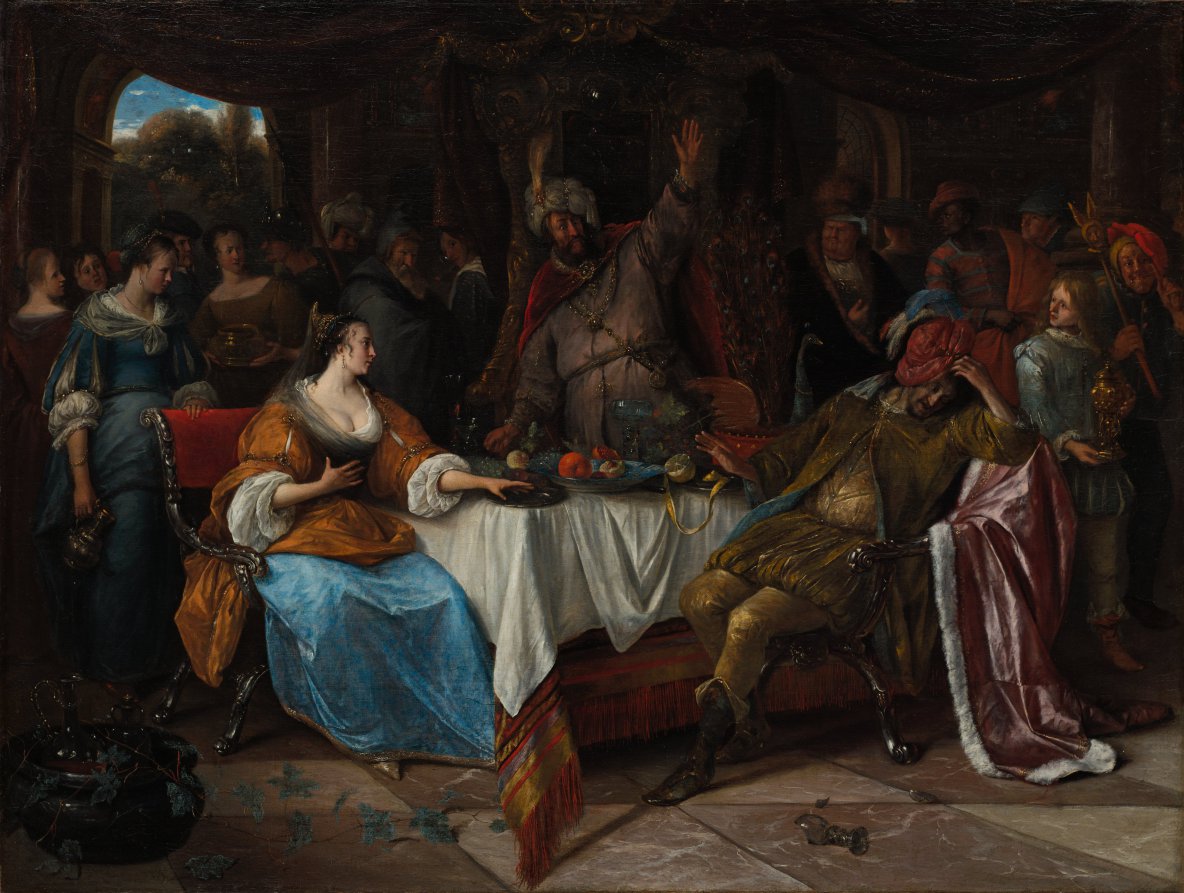
Esther, Ahasuerus, and Haman (c. 1668) is in the Cleveland Museum of Art collection. The museum's creator attribution is Jan Steen (Dutch, 1626–1679).
The work and its context
The museum's open-access catalogue describes the work:
Esther, the wife of the Persian king Ahasuerus, effectively concealed her Jewish identity until the prime minister Haman hatched a plot to annihilate the kingdom’s Jews. To save her people Esther persuades the king (at the center) to rescind his order. He then turns against Haman, who slumps in his seat, aware of his sudden fall from power and his bleak future.
Object facts
- Title: Esther, Ahasuerus, and Haman
- Date: c. 1668
- Creator attribution: Jan Steen (Dutch, 1626–1679)
- Culture: Netherlands
- Type: Painting
- Technique: oil on canvas
- Dimensions: Framed: 96.5 x 119.5 x 11 cm (38 x 47 1/16 x 4 5/16 in.); Unframed: 70 x 93 cm (27 9/16 x 36 5/8 in.)
- Collection: P - Netherlandish-Dutch
- Department: European Painting and Sculpture
- Accession number: 1964.153
A detail from the museum
At the center of this biblical scene, Steen included elements of a typical Dutch still life: a Roemer glass, a half-peeled lemon, and a blue-and-white porcelain dish.
Collection credit
John L. Severance Fund
Further reading listed by the museum
- Bredius, Abraham, Jan Steen (Amsterdam, 1927)
- Martin, Willem, "Neues uber Jan Steen," Zeitschrift fur Bildende Kunst, LXI (1927-28)
- Thieme, Ulrich, and Felix Becker, Allgemeines Lexikon der Bildenden Künstler, XXXI (Leipzig, 1937)
View the collection record
See the museum's photographs and full catalogue entry. Catalogue text is reproduced from the Cleveland Museum of Art's open-access data, with HTML formatting removed. This object and its supplied image are designated CC0.
Sources
More in Lifestyle
Keep reading