Ewer (Shigigata Suibyō) (1185–1333): Art, History and Details
Ewer (Shigigata Suibyō) at the Cleveland Museum of Art: 1185–1333, bronze. Explore the work's context, creator attribution and collection history.
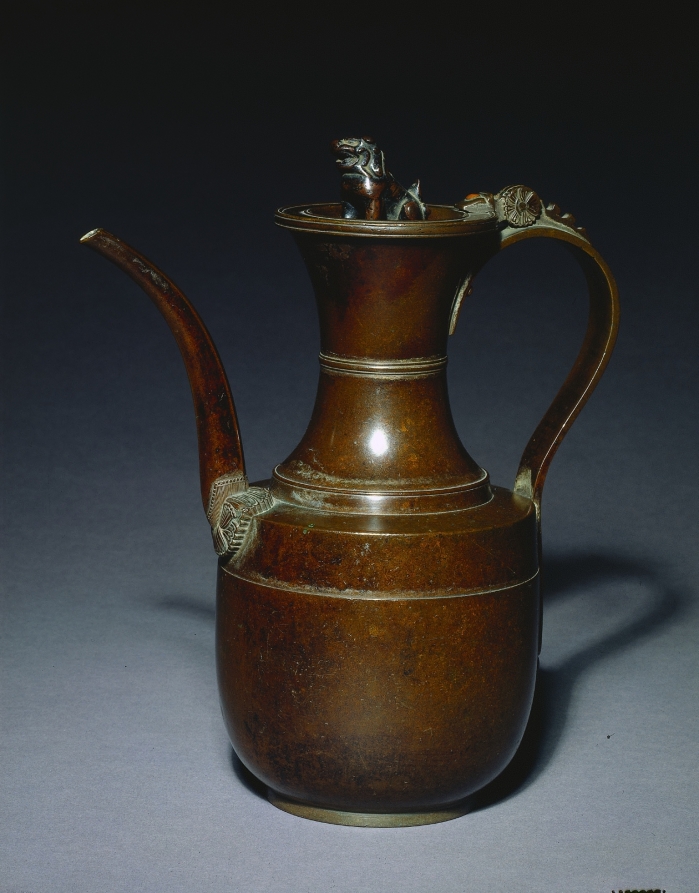
Ewer (Shigigata Suibyō) (1185–1333) is in the Cleveland Museum of Art collection.
The work and its context
The museum's open-access catalogue describes the work:
Ewers such as this one are known as Shigi-shaped for their association with the temple Chōgosonshiji located near Mount Shigi west of the city of Nara. It once contained water for use in ceremonies conducted before Buddhist deities. Known as kundika in Sanskrit, water vessels were originally one of 18 items monks needed to have to perform their daily duties.
Object facts
- Title: Ewer (Shigigata Suibyō)
- Date: 1185–1333
- Culture: Japan, Kamakura period (1185–1333)
- Type: Metalwork
- Technique: bronze
- Dimensions: Overall: 27 x 22 cm (10 5/8 x 8 11/16 in.)
- Collection: Japanese Art
- Department: Japanese Art
- Accession number: 1990.17
Collection credit
Bequest of Elizabeth M. Skala
Further reading listed by the museum
- Cunningham, Michael R. "Notable Acquisitions." The Bulletin of the Cleveland Museum of Art 78, no. 3 (1991): 63-147.
View the collection record
See the museum's photographs and full catalogue entry. Catalogue text is reproduced from the Cleveland Museum of Art's open-access data, with HTML formatting removed. This object and its supplied image are designated CC0.
Sources
More in Lifestyle
Keep reading
Related stories