Female Figurine (300–600 CE): Art, History and Details
Female Figurine at the Cleveland Museum of Art: 300–600 CE, ceramic, pigment. Explore the work's context, creator attribution and collection history.
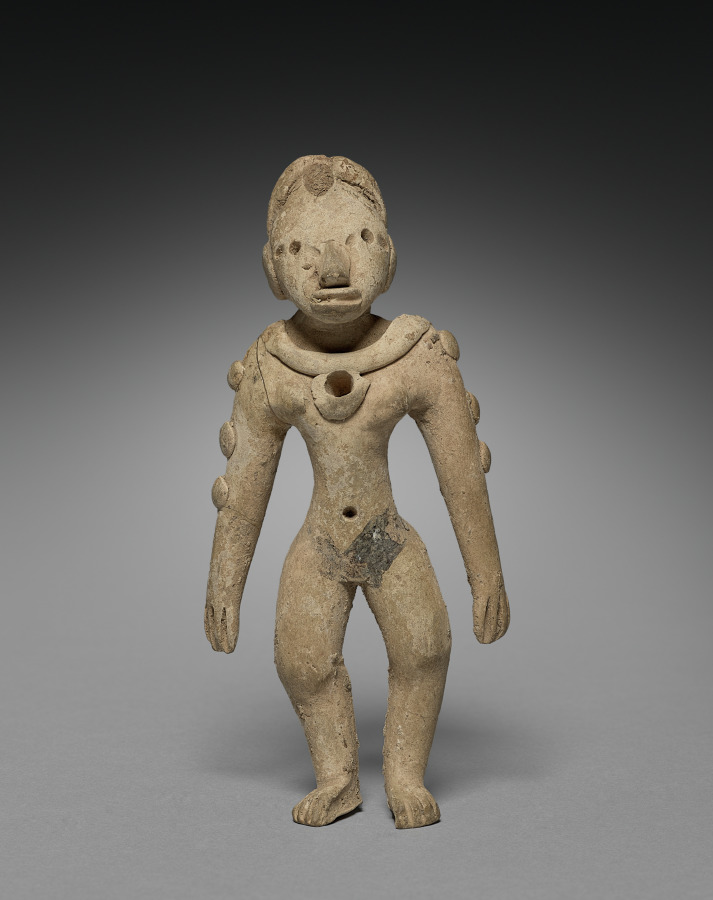
Female Figurine (300–600 CE) is in the Cleveland Museum of Art collection.
The work and its context
The museum's open-access catalogue describes the work:
Clay was a major medium in ancient Veracruz, located on Mexico’s Gulf Coast, and artists used it to create huge quantities of sculpture ranging from small whistles and figurines like this one to impressive, life-size figural effigies. Meanings are often obscure, but small objects were important enough to have been deposited in tombs and buried offerings.
Object facts
- Title: Female Figurine
- Date: 300–600 CE
- Culture: Mesoamerica, Veracruz, Huastec, Panuco Style
- Type: Sculpture
- Technique: ceramic, pigment
- Dimensions: Overall: 10.6 x 0.5 x 1.9 cm (4 3/16 x 3/16 x 3/4 in.)
- Collection: AA - Mesoamerica
- Department: Art of the Americas
- Accession number: 1990.159
A detail from the museum
Clay figurines were the earliest and most common art form in the ancient Mesoamerican culture region.
Collection credit
Gift of Mr. and Mrs. James C. Gruener
Further reading listed by the museum
- Young-Sánchez, Margaret. "The Gruener Collection of Pre-Columbian Art." The Bulletin of the Cleveland Museum of Art 79, no. 7 (1992): 234-75.
View the collection record
See the museum's photographs and full catalogue entry. Catalogue text is reproduced from the Cleveland Museum of Art's open-access data, with HTML formatting removed. This object and its supplied image are designated CC0.
Sources
More in Lifestyle
Keep reading