Fibula (Pin) (300s BCE): Art, History and Details
Fibula (Pin) at the Cleveland Museum of Art: 300s BCE, gold. Explore the work's context, creator attribution and collection history.
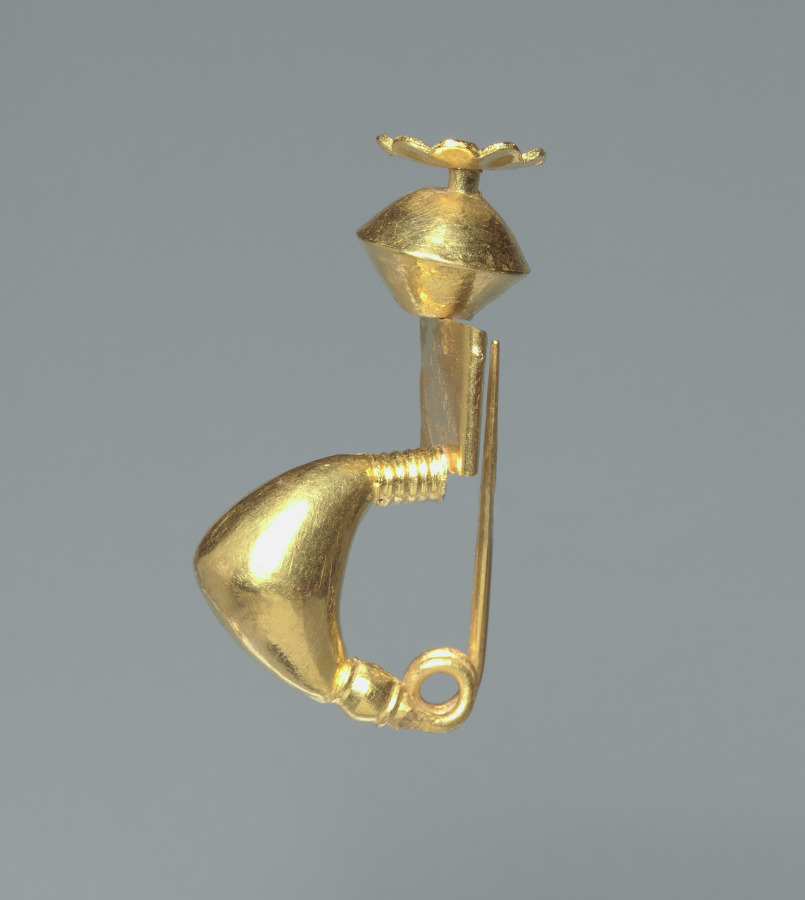
Fibula (Pin) (300s BCE) is in the Cleveland Museum of Art collection.
The work and its context
The museum's open-access catalogue describes the work:
This gold fibula consists of a leech-shaped bow attached to a pin, a plaque, and a biconical bead. A nine-petaled flower tops the bead. The fibula was likely used to fasten clothes by gathering fabric together. Unlike silver and bronze, gold does not easily tarnish.
Object facts
- Title: Fibula (Pin)
- Date: 300s BCE
- Culture: Etruscan
- Type: Jewelry
- Technique: gold
- Dimensions: Overall: 4.2 cm (1 5/8 in.)
- Collection: GR - Etruscan
- Department: Greek and Roman Art
- Accession number: 1974.17
A detail from the museum
This fibula was cast in three parts, the bow and pin, plaque, and bead, using the lost wax method.
Collection credit
Purchase from the J. H. Wade Fund
Further reading listed by the museum
- The Cleveland Museum of Art. The Cleveland Museum of Art Handbook. Cleveland, OH: The Cleveland Museum of Art, 1958.
View the collection record
See the museum's photographs and full catalogue entry. Catalogue text is reproduced from the Cleveland Museum of Art's open-access data, with HTML formatting removed. This object and its supplied image are designated CC0.
Sources
More in Lifestyle
Keep reading