Heart Scarab of Nefer (1540–1296 BCE): Art, History and Details
Heart Scarab of Nefer at the Cleveland Museum of Art: 1540–1296 BCE, graywacke. Explore the work's context, creator attribution and collection history.
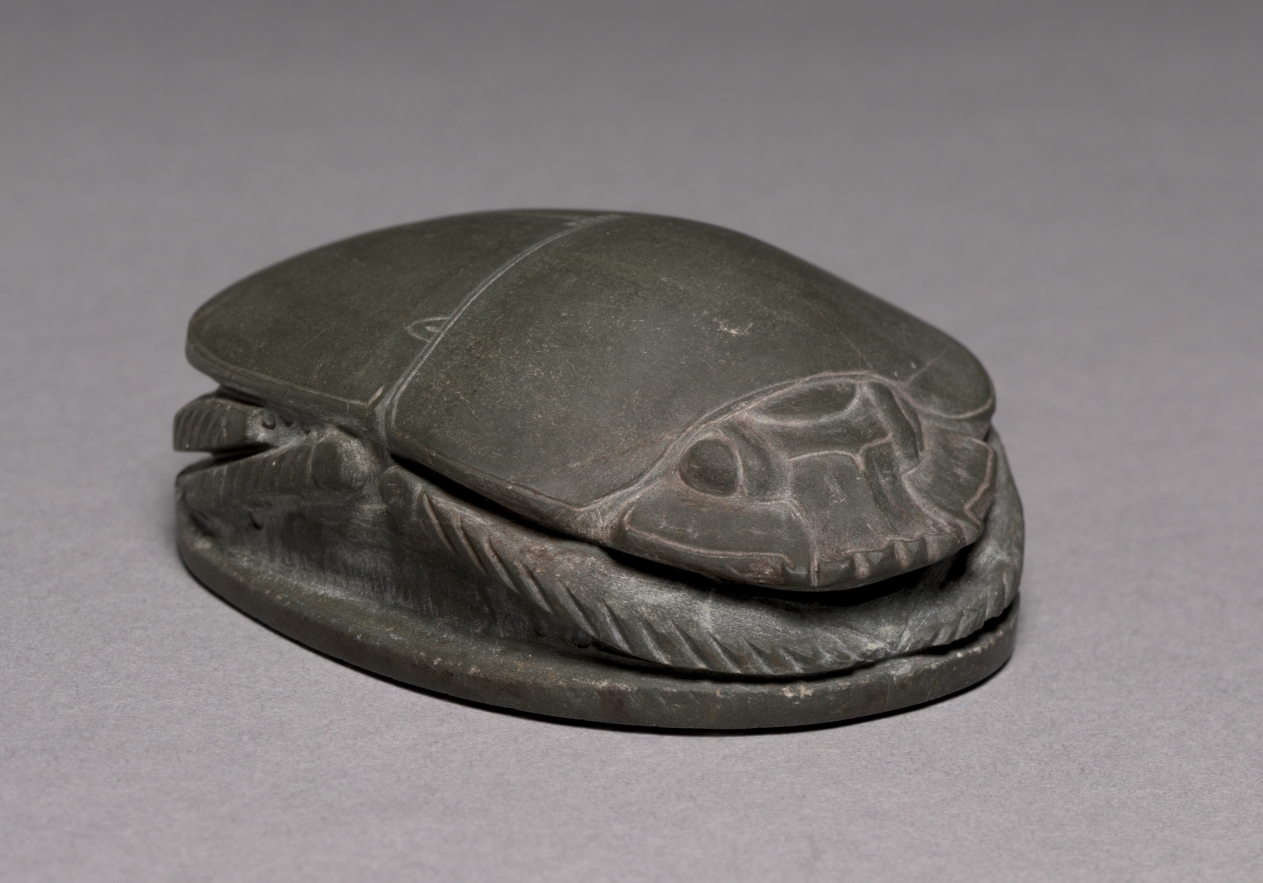
Heart Scarab of Nefer (1540–1296 BCE) is in the Cleveland Museum of Art collection.
The work and its context
The museum's open-access catalogue describes the work:
The design features in these objects borrow various ancient Egyptian funerary elements. The scale illustrated on top of the Cartier vanity case refers to the scale used in Osiris’s final judgment of the deceased. Amulets like the heart scarab were essential to the mummification process. They were placed throughout the mummy’s wrappings to protect the deceased during their journey in the afterlife. These inspired the Dior brooch seen on the model here. The ancient Egyptians believed amulets carried spells and that some, like the heart scarab, could sway opinions during the final judgement to help the deceased get to their version of heaven, called Iaru.
Object facts
- Title: Heart Scarab of Nefer
- Date: 1540–1296 BCE
- Culture: Egypt, New Kingdom (1540–1069 BCE), Dynasty 18
- Type: Scarabs
- Technique: graywacke
- Dimensions: Overall: 2.9 x 5.7 x 7.6 cm (1 1/8 x 2 1/4 x 3 in.)
- Collection: Egypt - New Kingdom
- Department: Egyptian and Ancient Near Eastern Art
- Accession number: 1921.1030
Collection credit
The Charles W. Harkness Endowment Fund
Further reading listed by the museum
- "Accessions." The Bulletin of the Cleveland Museum of Art 8, no. 9 (1921): 138-41.
- Berman, Lawrence M., and Kenneth J. Bohač. Catalogue of Egyptian Art: The Cleveland Museum of Art. Cleveland, OH: Cleveland Museum of Art, 1999
View the collection record
See the museum's photographs and full catalogue entry. Catalogue text is reproduced from the Cleveland Museum of Art's open-access data, with HTML formatting removed. This object and its supplied image are designated CC0.
Sources
More in Lifestyle
Keep reading