Figurine (400–100 BCE): Art, History and Details
Figurine at the Cleveland Museum of Art: 400–100 BCE, pottery with traces of white and red pigment. Explore the work's context, creator attribution and collection history.
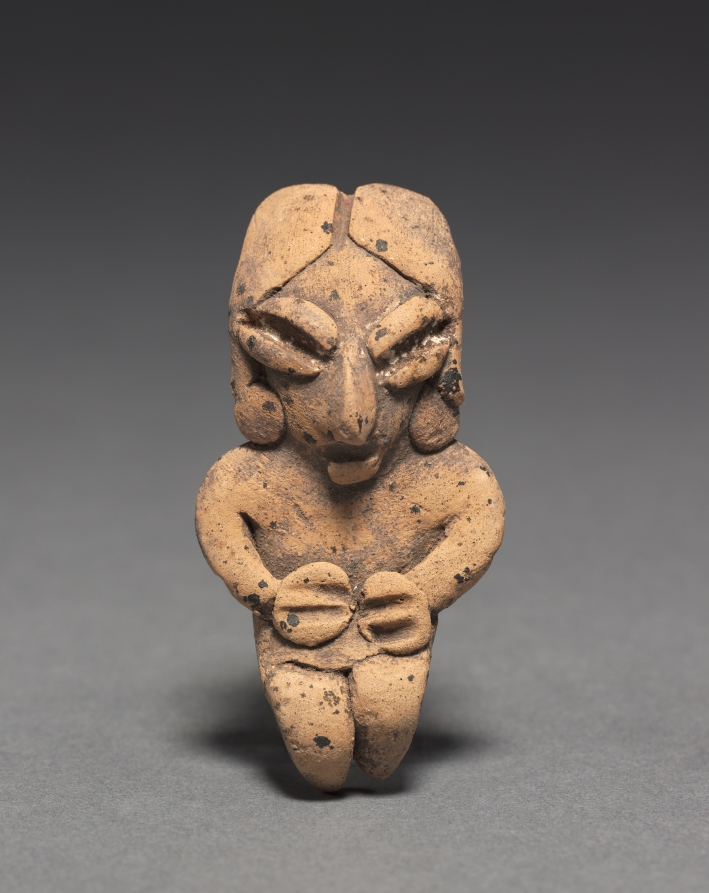
Figurine (400–100 BCE) is in the Cleveland Museum of Art collection.
The work and its context
The museum's open-access catalogue describes the work:
The Chupícuaro culture, located north of Mexico City in the state of Guanajuato, created a distinctive ceramic tradition including small clay figurines. This example is said to belong to a group of ten figurines from the same burial or cache (1990.145–154). The group includes both males and females that can be sorted into couples based on size.
Object facts
- Title: Figurine
- Date: 400–100 BCE
- Culture: Mesoamerica, Mexico, Guanajuato, Chupícuaro
- Type: Sculpture
- Technique: pottery with traces of white and red pigment
- Dimensions: Overall: 6.6 x 3.4 x 1.4 cm (2 5/8 x 1 5/16 x 9/16 in.)
- Collection: AA - Mesoamerica
- Department: Art of the Americas
- Accession number: 1990.147
A detail from the museum
Groups of figurines were sometimes arranged in scenes and likely used in household rituals.
Collection credit
Gift of Mr. and Mrs. James C. Gruener
Further reading listed by the museum
- Young-Sánchez, Margaret. "The Gruener Collection of Pre-Columbian Art." The Bulletin of the Cleveland Museum of Art 79, no. 7 (1992): 234-75.
View the collection record
See the museum's photographs and full catalogue entry. Catalogue text is reproduced from the Cleveland Museum of Art's open-access data, with HTML formatting removed. This object and its supplied image are designated CC0.
Sources
More in Lifestyle
Keep reading