Fire Altar Intaglio (c. 400 CE): Art, History and Details
Fire Altar Intaglio at the Cleveland Museum of Art: c. 400 CE, chalcedony. Explore the work's context, creator attribution and collection history.
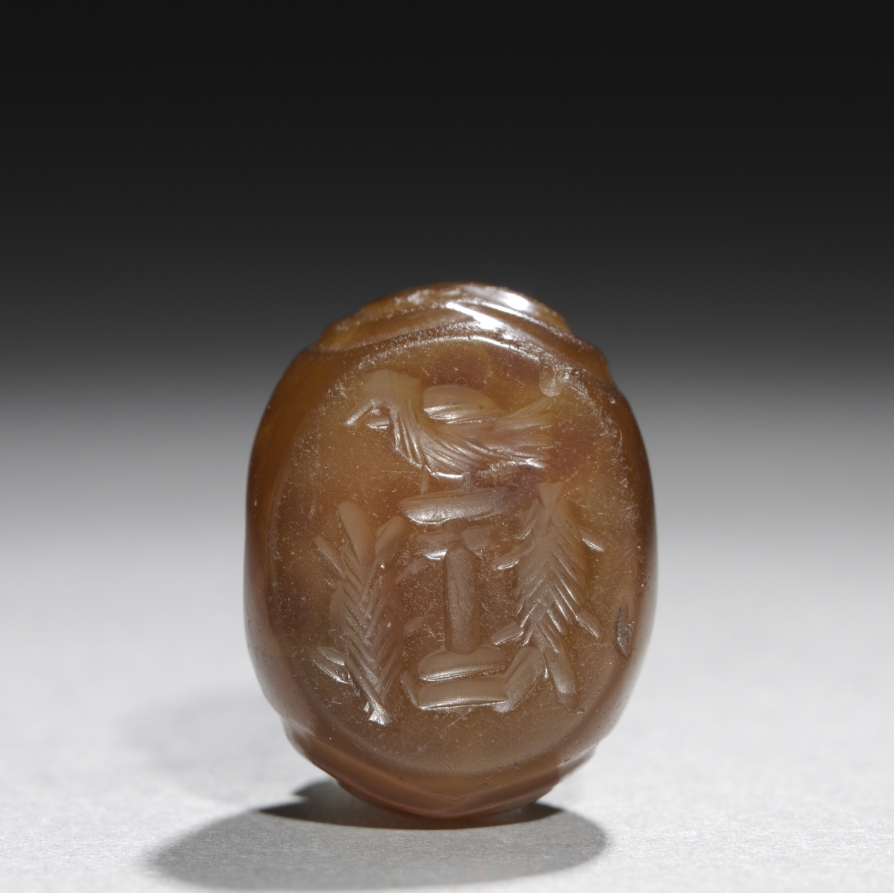
Fire Altar Intaglio (c. 400 CE) is in the Cleveland Museum of Art collection.
The work and its context
The museum's open-access catalogue describes the work:
A Zoroastrian fire altar is carved into this chalcedony intaglio, consisting of a pedestal, pillar, and bowl for an eternal flame. A bird perches above the altar bowl and fish flank the pedestal. A carved star decorates the backside. A pierced hole through the gemstone suggests it once hung on a cord around a neck or wrist. Although the fire altar is a Zoroastrian religious symbol, birds and fish also occur in Christian iconography.
Object facts
- Title: Fire Altar Intaglio
- Date: c. 400 CE
- Culture: Iran, Sasanian Empire (224–651 CE), reign of Hormizd II (303–309)
- Type: Glyptic
- Technique: chalcedony
- Dimensions: Overall: 2.4 x 2 x 1.7 cm (15/16 x 13/16 x 11/16 in.)
- Collection: Near Eastern Art
- Department: Egyptian and Ancient Near Eastern Art
- Accession number: 1954.593
A detail from the museum
Seal stones served as signatures and seals for documents.
Collection credit
Purchase from the J. H. Wade Fund
View the collection record
See the museum's photographs and full catalogue entry. Catalogue text is reproduced from the Cleveland Museum of Art's open-access data, with HTML formatting removed. This object and its supplied image are designated CC0.
Sources
More in Lifestyle
Keep reading