Five Guineas: George I (obverse); Shields and Star of the Order of the Garter (reverse) (1716): Art, History and Details
Five Guineas: George I (obverse); Shields and Star of the Order of the Garter (reverse) at the Cleveland Museum of Art: 1716, gold. Explore the work's context, creator attribution and collection history.
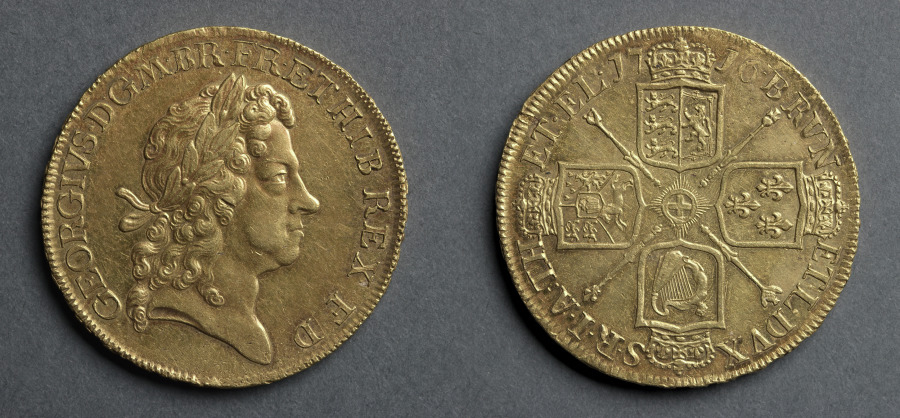
Five Guineas: George I (obverse); Shields and Star of the Order of the Garter (reverse) (1716) is in the Cleveland Museum of Art collection.
The work and its context
The museum's open-access catalogue describes the work:
The Act of the Union of 1706 by Queen Anne added the arms of Scotland to those of England. The shields now read as England & Scotland, France, Ireland, and Hanover. Around the shields the many titles of the king are abbreviated to sometimes only one letter: BRVN ET·L·DVX S·I·R·A·TH ET·EL Duke of Brunswick and Lueneburg, Arch Treasurer and Prince Elector of the Holy Roman Empire
Object facts
- Title: Five Guineas: George I (obverse); Shields and Star of the Order of the Garter (reverse)
- Date: 1716
- Culture: England, George I, 1714-1727
- Type: Coins
- Technique: gold
- Dimensions: Diameter: 3.7 cm (1 7/16 in.)
- Collection: MED - Numismatics
- Department: Medieval Art
- Accession number: 1969.206
A detail from the museum
In the center of the shields is the symbol of the Order of the Garter, an order of chivalry founded by Edward III of England in 1348.
Collection credit
The Norweb Collection
Further reading listed by the museum
- Cleveland Museum of Art, and Emery May Norweb. English Gold Coins, Ancient to Modern Times, On Loan to the Cleveland Museum of Art from the Norweb Collection. [Catalog. 1968.
View the collection record
See the museum's photographs and full catalogue entry. Catalogue text is reproduced from the Cleveland Museum of Art's open-access data, with HTML formatting removed. This object and its supplied image are designated CC0.
Sources
More in Lifestyle
Keep reading