Trikala Bhairava (1000s–1100s): Art, History and Details
Trikala Bhairava at the Cleveland Museum of Art: 1000s–1100s, stone. Explore the work's context, creator attribution and collection history.
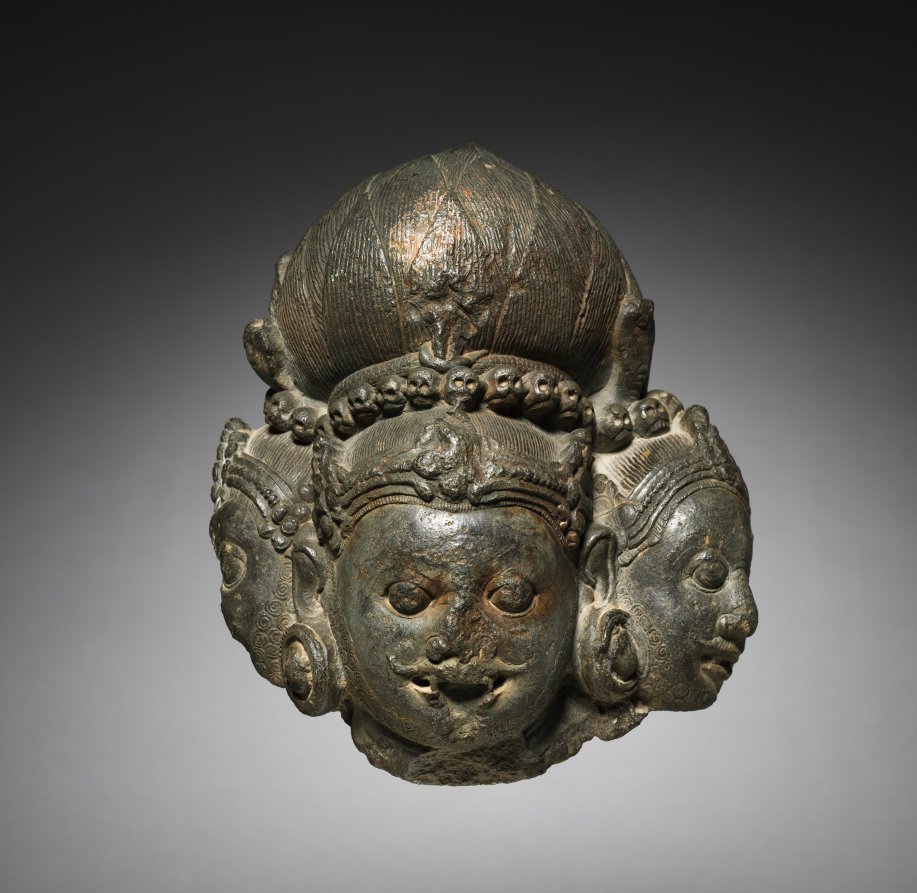
Trikala Bhairava (1000s–1100s) is in the Cleveland Museum of Art collection.
The work and its context
The museum's open-access catalogue describes the work:
Bhairava is the name of the wrathful aspect of the Hindu god Shiva. His ferocity and fearsome attributes include the crown of skulls and cobras, bulging eyes, fangs, and hair that stands on end. His three heads are indicative of the passing of time from past through present to the future, which is the meaning of his epithet Trikala, or "triple time." The ferocity of this figure reminds devotees not to waste a moment in striving to reach liberation from the relentless passage of time that ultimately leads to death and destruction. In the Hindu tradition, liberation can be achieved through devotion to god, which may attract his merciful decision to bring the devotee to eternal blissful union with him.
Object facts
- Title: Trikala Bhairava
- Date: 1000s–1100s
- Culture: Eastern India, Orissa
- Type: Sculpture
- Technique: stone
- Dimensions: Overall: 21.8 x 19.1 cm (8 9/16 x 7 1/2 in.)
- Collection: Indian Art
- Department: Indian and Southeast Asian Art
- Accession number: 1958.208
A detail from the museum
His earlobes stretch around the circumference of large earrings.
Collection credit
Gift of Louise Hawley Stone, In Memory of Louis Severance Higgins
View the collection record
See the museum's photographs and full catalogue entry. Catalogue text is reproduced from the Cleveland Museum of Art's open-access data, with HTML formatting removed. This object and its supplied image are designated CC0.
Sources
More in Lifestyle
Keep reading