The Triumph of Julius Caesar: Caesar Triumphant (1593–99): Art, History and Details
The Triumph of Julius Caesar: Caesar Triumphant at the Cleveland Museum of Art: 1593–99, woodcut printed on silk, heightened by hand with gold. Explore the work's context, creator attribution and collection history.
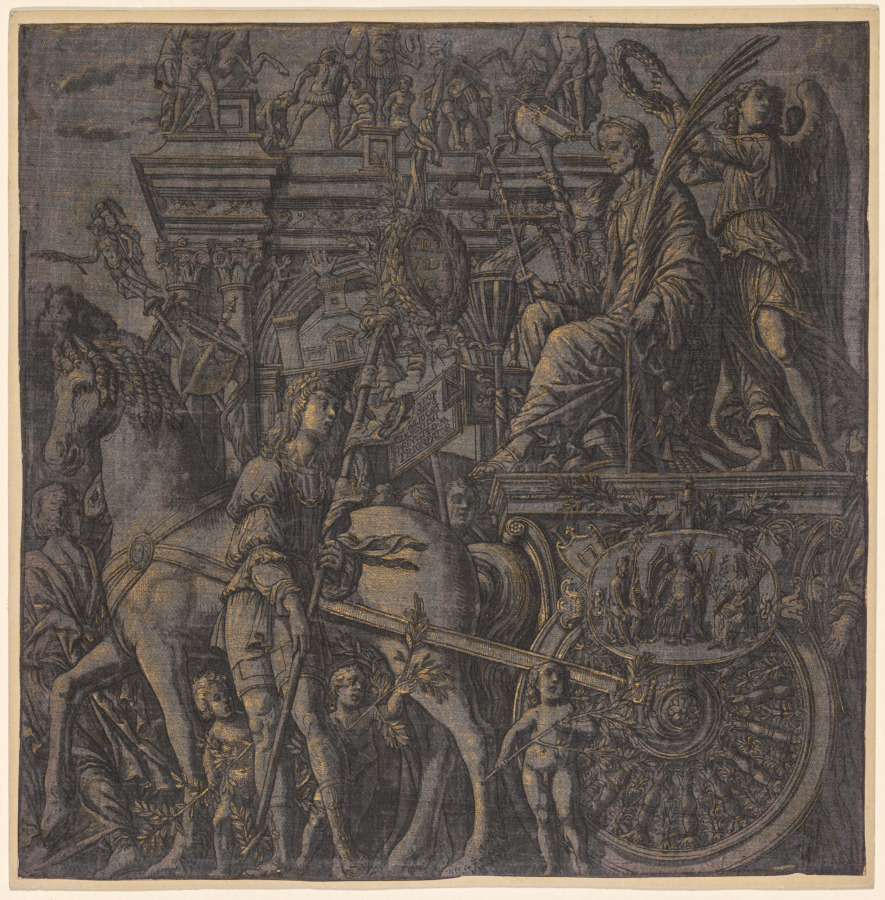
The Triumph of Julius Caesar: Caesar Triumphant (1593–99) is in the Cleveland Museum of Art collection. The museum's creator attribution is Andrea Andreani (Italian, about 1558–1610); Andrea Mantegna (Italian, about 1431–1506).
The work and its context
The museum's open-access catalogue describes the work:
Commissioned by Duke Vincenzo Gonzaga, this series of chiaroscuro woodcuts reproduces Andrea Mantegna’s Triumph of Julius Caesar, painted a century earlier. The scenes imaginatively portray the triumphal procession of the renowned Roman general and consul Julius Caesar following his successful defeat of Gaul in 52 BC. Each section of the continuous frieze shows elements typical of these parades, sanctioned by the Roman Senate and described in ancient texts. The printed suite’s frontispiece features a portrait bust of Mantegna, and the text below boasts that the famous paintings attracted many viewers. People who owned sets of these woodcuts often tacked them up to create a decorative frieze. Andreani issued the prints with a sheet of classical columns that could be cut out and placed between the scenes. Two fragments of these columns, colored orange, still flank the fourth scene. This special impression of the final woodcut in Andreani’s Triumph of Julius Caesar was printed on dyed silk. The gold highlights, added by hand, make Caesar in his triumphal car appear especially luxurious. In their descriptions of Roman triumphs, the ancient chroniclers Plutarch and Appian each wrote that the hero of honor wore purple robes decorated with gold.
Object facts
- Title: The Triumph of Julius Caesar: Caesar Triumphant
- Date: 1593–99
- Creator attribution: Andrea Andreani (Italian, about 1558–1610); Andrea Mantegna (Italian, about 1431–1506)
- Culture: Italy
- Type: Print
- Technique: woodcut printed on silk, heightened by hand with gold
- Dimensions: Sheet: 37.6 x 37.3 cm (14 13/16 x 14 11/16 in.)
- Collection: PR - Woodcut
- Department: Prints
- Accession number: 1994.102
Collection credit
John L. Severance Fund
Further reading listed by the museum
- Wehn, James. "Gods and Heroes: Ancient legends found new life in Renaissance art.” Cleveland Art: Cleveland Museum of Art Members Magazine 57, no. 5 (September/October 2017): 10-11.
- Baselitz, Georg, and Szépművészeti Múzeum (Hungary). The Mannerist Mind: Prints from the Georg Baselitz Collection. Edited by Kinga Bódi and Eszter Kardos. Budapest, Munich: Museum of Fine Arts ; Hirmer, 2025.
View the collection record
See the museum's photographs and full catalogue entry. Catalogue text is reproduced from the Cleveland Museum of Art's open-access data, with HTML formatting removed. This object and its supplied image are designated CC0.
Sources
More in Lifestyle
Keep reading