Five Guineas: George II (obverse); Shield of Arms (reverse) (1746): Art, History and Details
Five Guineas: George II (obverse); Shield of Arms (reverse) at the Cleveland Museum of Art: 1746, gold. Explore the work's context, creator attribution and collection history.
Five Guineas: George II (obverse); Shield of Arms (reverse) (1746) is in the Cleveland Museum of Art collection.
The work and its context
The museum's open-access catalogue describes the work:
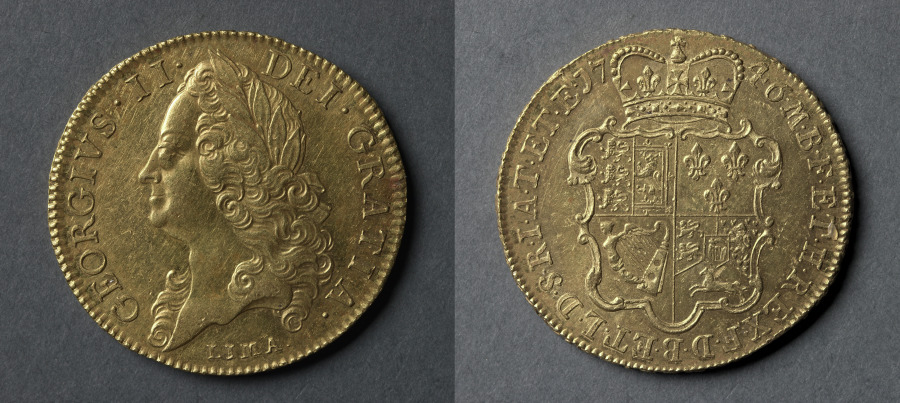
A new bust now appears on the coinage showing the king as an older man. The word LIMA that appears below the bust on this year only, refers to bullion captured by Admiral Anson from a Spanish plate fleet at Manila during his circumnavigation of the globe (1739–43). It also probably includes bullion supplied by a number of privateers operating against the Spanish plate fleets in the Atlantic. Why the actual word "Lima" was chosen to mark this supply of bullion has never been satisfactorily explained. The mint record book of the period simply records a warrant being issued for the inclusion of the word.
Object facts
- Title: Five Guineas: George II (obverse); Shield of Arms (reverse)
- Date: 1746
- Culture: England, George II, 1727-1760
- Type: Coins
- Technique: gold
- Dimensions: Diameter: 3.7 cm (1 7/16 in.)
- Collection: MED - Numismatics
- Department: Medieval Art
- Accession number: 1969.208
A detail from the museum
The crowned quartered shield of arms represents from right to left, top to bottom, a framed lion for Scotland, France with fleurs de lys, Ireland with harp, and two lions for Brunswick, among others.
Collection credit
The Norweb Collection
Further reading listed by the museum
- Cleveland Museum of Art, and Emery May Norweb. English Gold Coins, Ancient to Modern Times, On Loan to the Cleveland Museum of Art from the Norweb Collection. [Catalog. 1968.
View the collection record
See the museum's photographs and full catalogue entry. Catalogue text is reproduced from the Cleveland Museum of Art's open-access data, with HTML formatting removed. This object and its supplied image are designated CC0.
Sources
More in Lifestyle
Keep reading