Flower Vase (1912–14): Art, History and Details
Flower Vase at the Cleveland Museum of Art: 1912–14, Porecelain with green glaze. Explore the work's context, creator attribution and collection history.
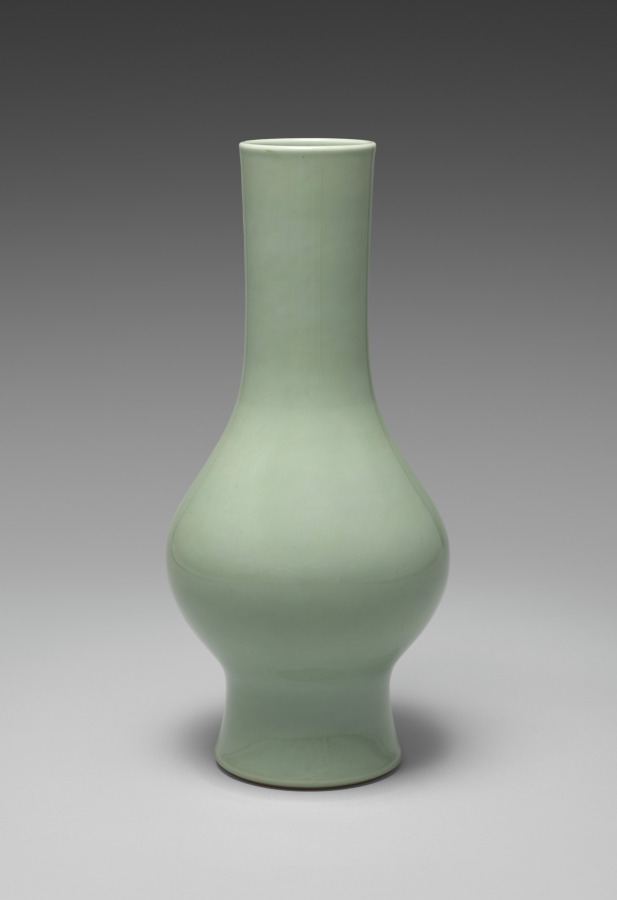
Flower Vase (1912–14) is in the Cleveland Museum of Art collection. The museum's creator attribution is Seifū Yohei III (Japanese, 1851–1914).
The work and its context
The museum's open-access catalogue describes the work:
This flower vase has a tall, slightly flared foot and bulbous body with a slimmer neck. It is completely undecorated but for the hisoku, or “mysterious color,” glaze. Its box lid has a red seal with a flower on it, a rather unusual feature also seen on the box for the green-glazed water container that belonged to the Hosokawa family (see CMA 2022.197).
Object facts
- Title: Flower Vase
- Date: 1912–14
- Creator attribution: Seifū Yohei III (Japanese, 1851–1914)
- Culture: Japan, Meiji period (1868–1912)
- Type: Ceramic
- Technique: Porecelain with green glaze
- Dimensions: height: 35.5 cm (14 in.); Diameter: 16.5 cm (6 1/2 in.)
- Collection: Japanese Art
- Department: Japanese Art
- Accession number: 2022.233
A detail from the museum
The vase's box lid identifies the glaze as hisoku 秘色 or “mysterious color.”
Collection credit
Gift of James and Christine Heusinger
Further reading listed by the museum
- Maezaki, Shinya and Sinéad Vilbar. Colors of Kyoto: The Seifū Yohei Ceramic Studio. Cleveland, OH: The Cleveland Museum of Art, 2023.
View the collection record
See the museum's photographs and full catalogue entry. Catalogue text is reproduced from the Cleveland Museum of Art's open-access data, with HTML formatting removed. This object and its supplied image are designated CC0.
Sources
More in Lifestyle
Keep reading