Footed Platter (1600s): Art, History and Details
Footed Platter at the Cleveland Museum of Art: 1600s, nephrite (jade). Explore the work's context, creator attribution and collection history.
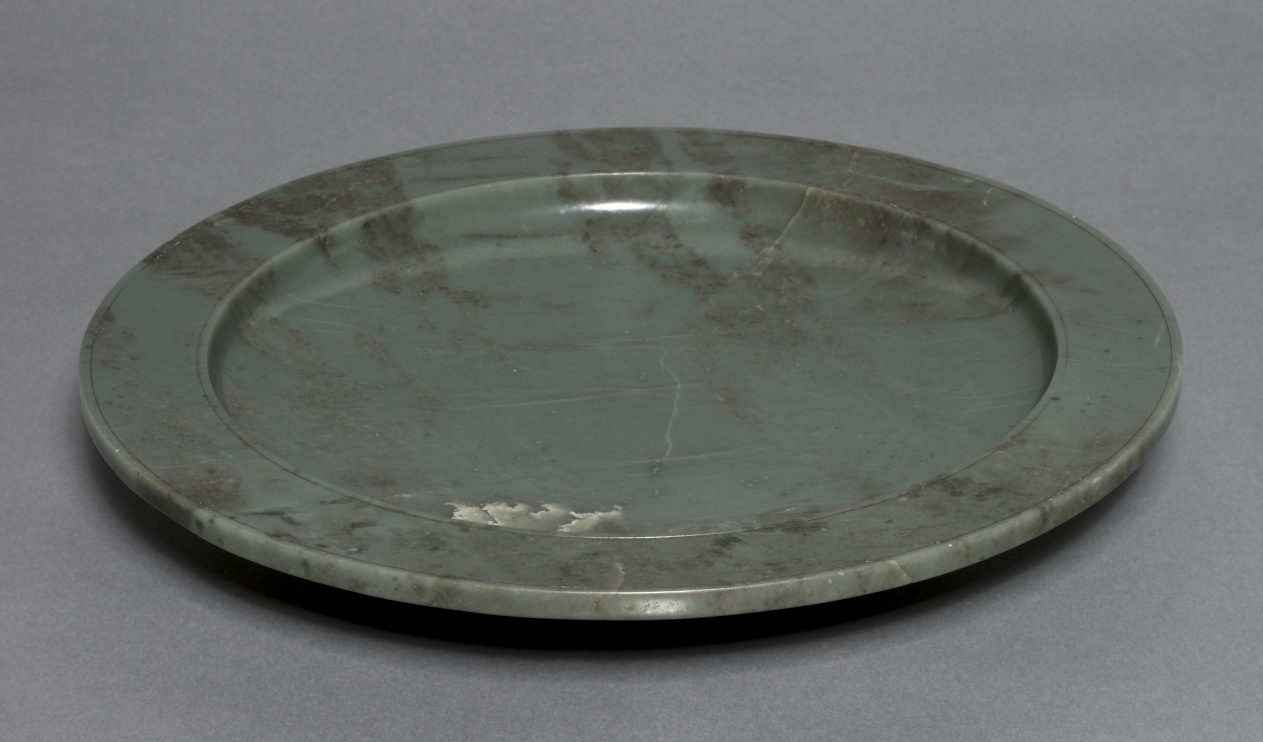
Footed Platter (1600s) is in the Cleveland Museum of Art collection.
The work and its context
The museum's open-access catalogue describes the work:
Emperors Jahangir and Shah Jahan both admired jade. The material linked them to their ancestor Timur, whose tombstone in Samarkand was carved from a large piece of jade. This platter probably would have been used for serving fruit at courtly gatherings.
Object facts
- Title: Footed Platter
- Date: 1600s
- Culture: India, Mughal Dynasty (1526-1756)
- Type: Jade
- Technique: nephrite (jade)
- Dimensions: Diameter: 41.1 cm (16 3/16 in.)
- Collection: Indian Art
- Department: Indian and Southeast Asian Art
- Accession number: 1976.73
A detail from the museum
Jade was believed to be utilitarian because of its mythical ability to counteract poison.
Collection credit
Given in memory of Ambassador R. Henry Norweb
View the collection record
See the museum's photographs and full catalogue entry. Catalogue text is reproduced from the Cleveland Museum of Art's open-access data, with HTML formatting removed. This object and its supplied image are designated CC0.
Sources
More in Lifestyle
Keep reading