Fragment of a Woodblock Print on Linen (1200s–1300s): Art, History and Details
Fragment of a Woodblock Print on Linen at the Cleveland Museum of Art: 1200s–1300s, pigment, linen. Explore the work's context, creator attribution and collection history.
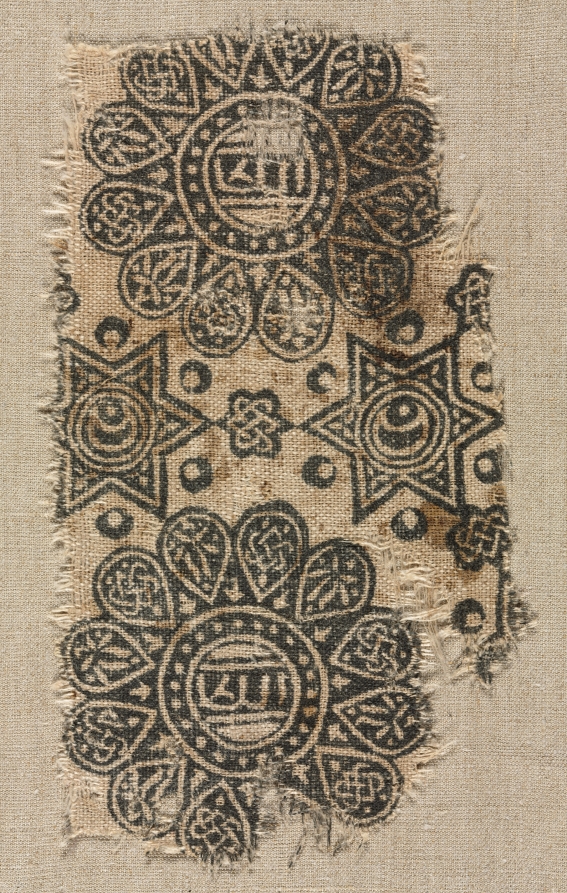
Fragment of a Woodblock Print on Linen (1200s–1300s) is in the Cleveland Museum of Art collection.
The work and its context
The museum's open-access catalogue describes the work:
Egypt remained an active hub of textile production and trade under the rule of the Mamluk Sultanate (1250–1517), a Muslim dynasty. In the block-print technology used on this textile, multiple carved wooden blocks impress patterns on cotton or linen fabrics. Artisans used separate blocks to transfer the round medallions, create the stars, and apply the interlocking motif at the fragment’s center. The inner medallion inscription reads “the sultan” in an abbreviated Arabic spelling. Block-printed textiles were in high demand around the Mediterranean and Red Sea regions, with many produced in Egypt and others imported from western India.
Object facts
- Title: Fragment of a Woodblock Print on Linen
- Date: 1200s–1300s
- Culture: Mamluk Sultanate (Egypt)
- Type: Textile
- Technique: pigment, linen
- Dimensions: Overall: 20.5 x 11.9 cm (8 1/16 x 4 11/16 in.)
- Collection: Textiles
- Department: Textiles
- Accession number: 1929.907
Collection credit
Gift of George D. Pratt
Further reading listed by the museum
- Pfister, Rudoph. Les toiles imprimées de Fostat et l'Hindoustan. Paris: Les Éditions d'art et d'histoire, 1938.
View the collection record
See the museum's photographs and full catalogue entry. Catalogue text is reproduced from the Cleveland Museum of Art's open-access data, with HTML formatting removed. This object and its supplied image are designated CC0.
Sources
More in Lifestyle
Keep reading