Fragment of Round Segmentum (400s–600s CE): Art, History and Details
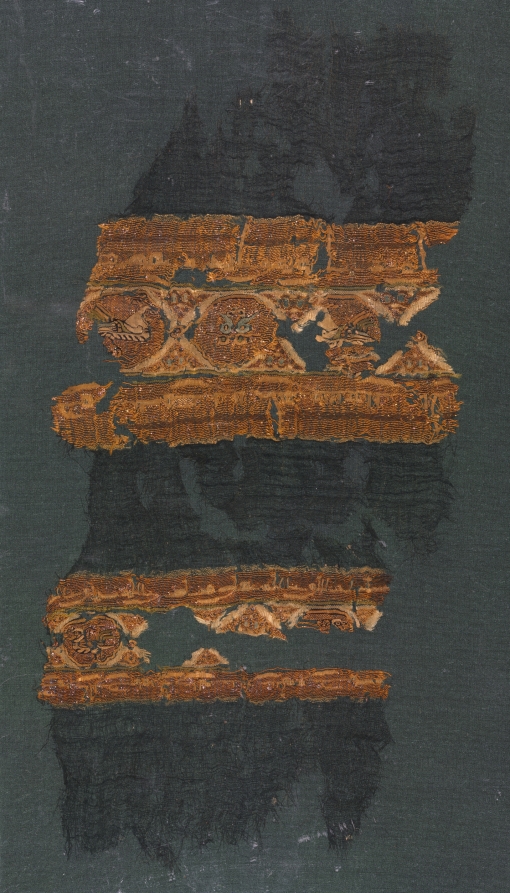
Fragment of Round Segmentum at the Cleveland Museum of Art: 400s–600s CE, Wool: tabby ground, inwoven tapestry ornament. Explore the work's context, creator attribution and collection history.
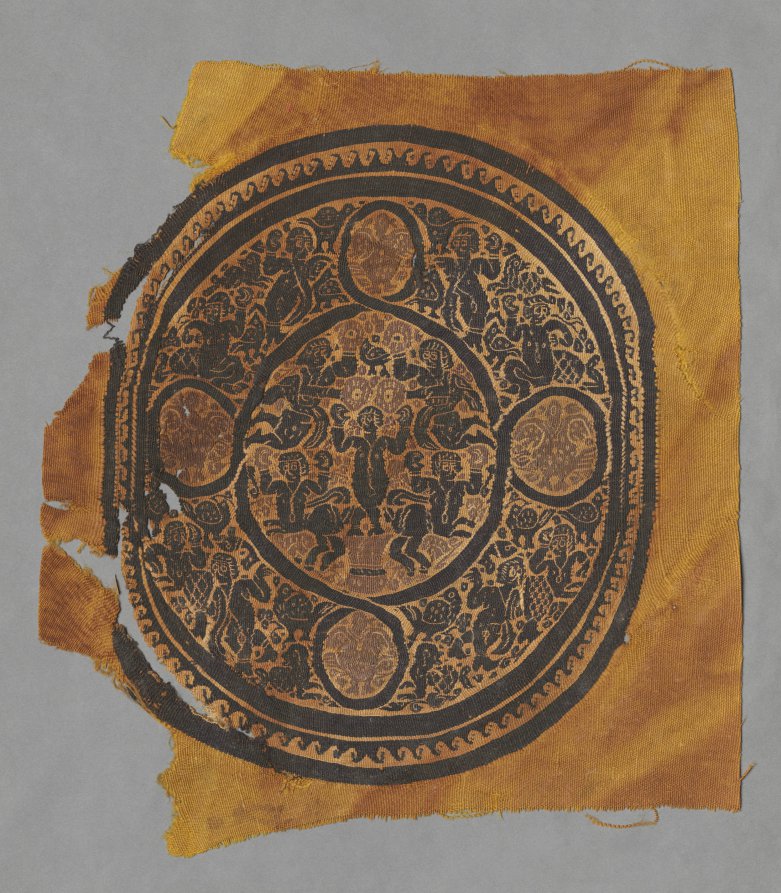
Fragment of Round Segmentum (400s–600s CE) is in the Cleveland Museum of Art collection.
The work and its context
The museum's open-access catalogue describes the work:
Segmentum (medallions) like this decorated tunics in Coptic Egypt. Medallions were woven into a tunic’s shoulders or lower half. This medallion's design scheme displays waves encircling geometric shapes and representational images. It features a cross-legged dancer balanced on a vase with hands raised prayerfully. Other dancers clang cymbals while satyrs frolic below them. Coptic can refer to a language, an ethnic group, a religion, or an artistic style (which wasn’t always Christian). Coptic classical imagery reflects the Hellenized (Greek, 305–30 BC) and Roman cultures of Egypt (30 BC–AD 395) before the Byzantine era.
Object facts
- Title: Fragment of Round Segmentum
- Date: 400s–600s CE
- Culture: Africa, North Africa, Egypt, Coptic-style weaver(s)
- Type: Textile
- Technique: Wool: tabby ground, inwoven tapestry ornament
- Dimensions: Overall: 33 x 29.2 cm (13 x 11 1/2 in.)
- Collection: Textiles
- Department: Textiles
- Accession number: 1982.271
A detail from the museum
Human figures with fish tails are woven into the border of this medallion.
Collection credit
Purchase from the J. H. Wade Fund
View the collection record
See the museum's photographs and full catalogue entry. Catalogue text is reproduced from the Cleveland Museum of Art's open-access data, with HTML formatting removed. This object and its supplied image are designated CC0.
Sources
More in Lifestyle
Keep reading