Tiraz with gold (1075–99): Art, History and Details
Tiraz with gold at the Cleveland Museum of Art: 1075–99, plain weave with inwoven tapestry weave: linen, silk, and gold filé. Explore the work's context, creator attribution and collection history.
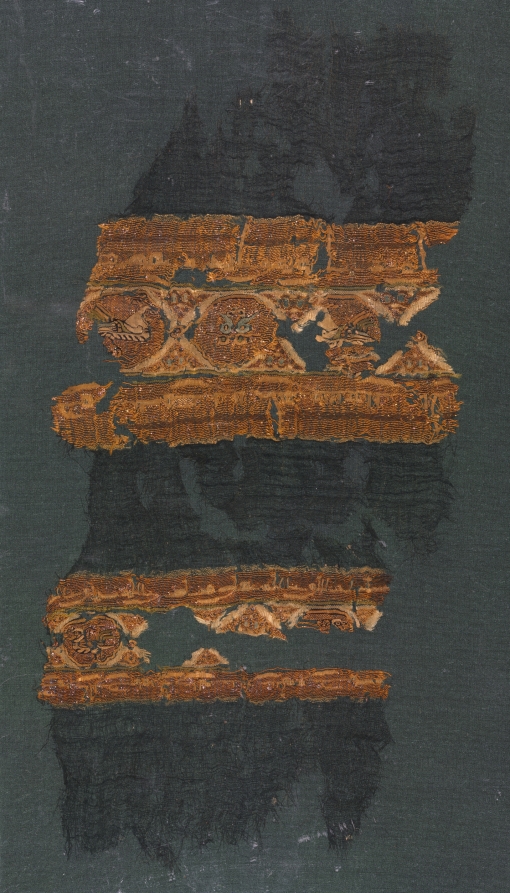
Tiraz with gold (1075–99) is in the Cleveland Museum of Art collection.
The work and its context
The museum's open-access catalogue describes the work:
Gold thread forms the background of undecipherable texts and interlaced medallions in two tripartite bands woven with silk in slit-tapestry weave on a dark blue-green sharb linen ground. Sharb is a fine linen, which often formed the ground fabric for ṭirāz. Roosters, hens, and confronted chicks decorate the medallions.
Object facts
- Title: Tiraz with gold
- Date: 1075–99
- Culture: Egypt, Fatimid period
- Type: Textile
- Technique: plain weave with inwoven tapestry weave: linen, silk, and gold filé
- Dimensions: Overall: 29 x 14.8 cm (11 7/16 x 5 13/16 in.)
- Collection: Textiles
- Department: Textiles
- Accession number: 1982.103
Collection credit
Andrew R. and Martha Holden Jennings Fund
Further reading listed by the museum
- Mackie, Louise W. Symbols of Power: Luxury Textiles from Islamic Lands, 7th-21st Century. Cleveland; New Haven: Cleveland Museum of Art; Yale University Press, 2015.
View the collection record
See the museum's photographs and full catalogue entry. Catalogue text is reproduced from the Cleveland Museum of Art's open-access data, with HTML formatting removed. This object and its supplied image are designated CC0.
Sources
More in Lifestyle
Keep reading