Fragment, Sleeve Ornament from a Tunic (500s - early 600s): Art, History and Details
Fragment, Sleeve Ornament from a Tunic at the Cleveland Museum of Art: 500s - early 600s, tapestry (probably originally inwoven in tabby ground); wool. Explore the work's context, creator attribution and collection history.
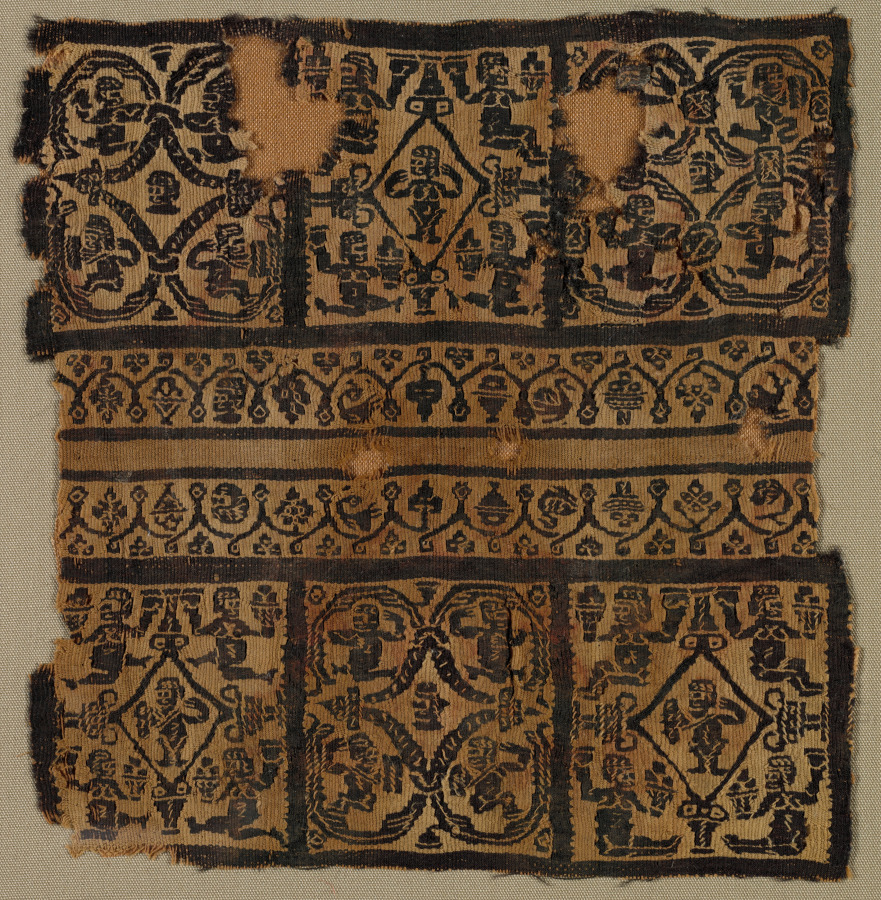
Fragment, Sleeve Ornament from a Tunic (500s - early 600s) is in the Cleveland Museum of Art collection.
The work and its context
The museum's open-access catalogue describes the work:
This fragment originally decorated a tunic, the prevalent garment worn by adults and children around the Byzantine Mediterranean. Six square panels feature stylized human figures in various states of movement. With baskets and vessels in hand, they sit, stand, and leap within the scenes. Separating the square panels in the middle, two decorative bands depict alternating stylized figural busts, birds, baskets, and vegetal motifs. Tunic decoration such as this provided wearers a way to express their social status through clothes.
Object facts
- Title: Fragment, Sleeve Ornament from a Tunic
- Date: 500s - early 600s
- Culture: Egypt, Byzantine period
- Type: Textile
- Technique: tapestry (probably originally inwoven in tabby ground); wool
- Dimensions: Overall: 21.6 x 20.6 cm (8 1/2 x 8 1/8 in.); Mounted: 29.8 x 28.6 cm (11 3/4 x 11 1/4 in.)
- Collection: T - Coptic
- Department: Textiles
- Accession number: 1926.155.a
Collection credit
Gift of George D. Pratt
View the collection record
See the museum's photographs and full catalogue entry. Catalogue text is reproduced from the Cleveland Museum of Art's open-access data, with HTML formatting removed. This object and its supplied image are designated CC0.
Sources
More in Lifestyle
Keep reading