Funerary Panel of a Man (about 138–92 CE): Art, History and Details
Funerary Panel of a Man at the Cleveland Museum of Art: about 138–92 CE, encaustic on linen. Explore the work's context, creator attribution and collection history.
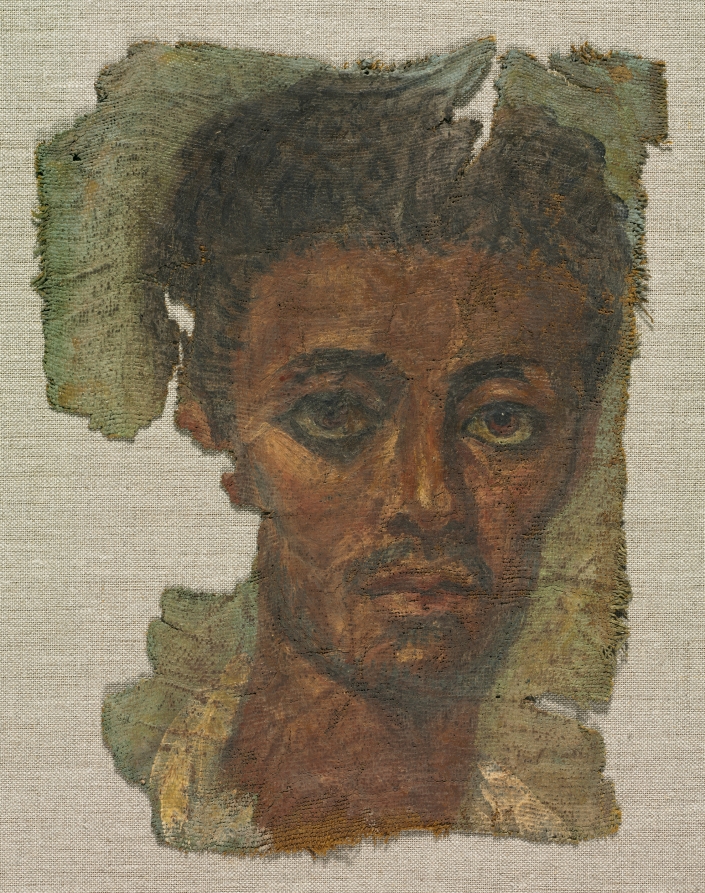
Funerary Panel of a Man (about 138–92 CE) is in the Cleveland Museum of Art collection.
The work and its context
The museum's open-access catalogue describes the work:
A young man with a slight mustache and warm brown eyes looks at the viewer from this painting. The linen on which his image was rendered was a less popular alternative to wood. Its delicate surface was only workable with brushes, and not the flat metal tools used for details on wooden paintings. The rest of the cartonnage (body case) the man’s image was once part of was painted with ancient Egyptian religious imagery, like that of the young man Artemidorus. The blended decorative forms on the cartonnage show how distinctive Greco-Roman and Egyptian representational systems interacted in Roman-ruled Egypt.
Object facts
- Title: Funerary Panel of a Man
- Date: about 138–92 CE
- Culture: Antonine-era Roman Empire (Egypt), unknown painter
- Type: Painting
- Technique: encaustic on linen
- Dimensions: Overall: 24.8 x 19 cm (9 3/4 x 7 1/2 in.)
- Collection: Egypt - Greco-Roman
- Department: Egyptian and Ancient Near Eastern Art
- Accession number: 1971.135
Collection credit
John L. Severance Fund
Further reading listed by the museum
- Lee, Sherman E. "The Year in Review for 1971." The Bulletin of the Cleveland Museum of Art 59, no. 1 (1972).
- Cooney, John D. “Portraits from Roman Egypt.” The Bulletin of the Cleveland Museum of Art 59, no. 2 (February 1972): 51–55.
- Parlasca, Klaus. Ritratti di mummie. Roma: Erma di Bretschneider, 1977.
View the collection record
See the museum's photographs and full catalogue entry. Catalogue text is reproduced from the Cleveland Museum of Art's open-access data, with HTML formatting removed. This object and its supplied image are designated CC0.
Sources
More in Lifestyle
Keep reading