Ganesha (600s): Art, History and Details
Ganesha at the Cleveland Museum of Art: 600s, sandstone. Explore the work's context, creator attribution and collection history.
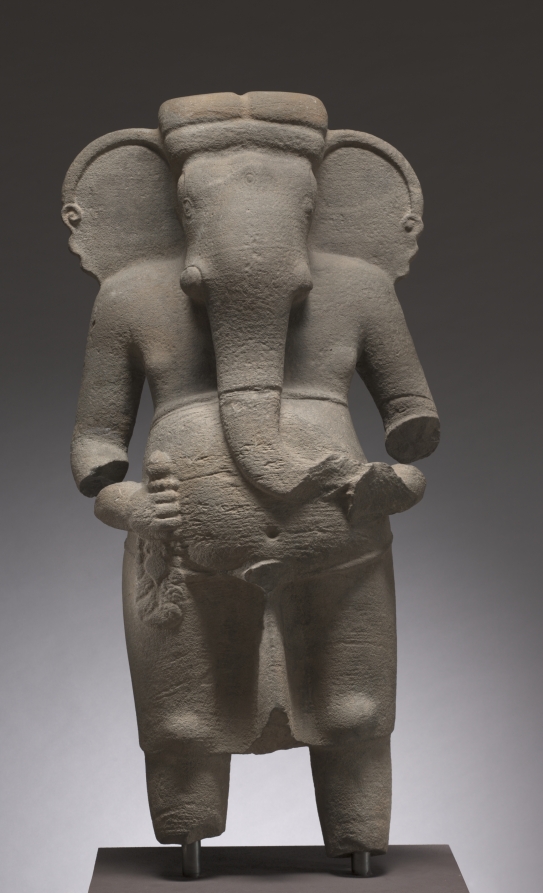
Ganesha (600s) is in the Cleveland Museum of Art collection.
The work and its context
The museum's open-access catalogue describes the work:
Among the first Hindu deities to be venerated in the form of a large-scale stone sculpture in Southeast Asia, Ganesha presides over obstacles, either creating or removing them. At the beginning of any endeavor, to assure its success, worshipers affectionately offer him prayers and food, such as the sweet cakes and radish he enjoys in this sculpture.
Object facts
- Title: Ganesha
- Date: 600s
- Culture: Southern Cambodia or Vietnam
- Type: Sculpture
- Technique: sandstone
- Dimensions: Overall: 122 x 58.7 x 23.8 cm (48 1/16 x 23 1/8 x 9 3/8 in.)
- Collection: Cambodian Art
- Department: Indian and Southeast Asian Art
- Accession number: 1987.147
A detail from the museum
Ganesha wears a short sampot held by a narrow belt.
Collection credit
Leonard C. Hanna Jr. Fund
Further reading listed by the museum
- Turner, Evan H. “The Year in Review for 1987.” The Bulletin of the Cleveland Museum of Art 75, no. 2 (1988): 30–71.
View the collection record
See the museum's photographs and full catalogue entry. Catalogue text is reproduced from the Cleveland Museum of Art's open-access data, with HTML formatting removed. This object and its supplied image are designated CC0.
Sources
More in Lifestyle
Keep reading